

Black Power, White Heat From Solidarity Politics to Radical Chic
, by Echols, Alice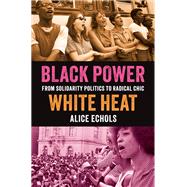
- ISBN: 9780197789032 | 019778903X
- Cover: Hardcover
- Copyright: 1/20/2026
A rich history of cross-racial coalitions and alliances of the Sixties' freedom movement, acclaimed historian Alice Echols's Black Power, White Heat reshapes our understanding of the entire era.
One of the most divisive issues in recent progressive politics has been what role, if any, allies might legitimately play in other people's movements. Despite the significance of this debate, it has taken place in a historical vacuum.
In Black Power, White Heat: From Solidarity Politics to Radical Chic, the Sixties historian Alice Echols explores what happened some sixty years ago when whites and Blacks came together in the fight against racism. She tells this story by focusing on two Black-led organizations that bookend the Sixties: The Student Nonviolent Coordinating Committee (SNCC) and the Black Panther Party. In SNCC, whites were, in part, meant to generate a "white heat" so searing it would accelerate change. Results were mixed, and white activists formed new movements, from women's liberation to draft resistance.
By 1967, the Black Panther Party was advancing its own unique brand of "revolutionary nationalism", and seeking out white supporters. Partnering with whites brought the group visibility and resources, but it also put the Panthers at odds with other Black radicals, with unfortunate consequences.
Black Power, White Heat explains how solidarity lost credibility, and not just from within the movement. Here, the FBI played a key role, and so did the discourse of "radical chic", advanced most effectively by the journalist Tom Wolfe. Still, even as Black-white solidarity lost steam, it was not entirely played out. In some of the era's most important political trials, even courtrooms became sites of solidarity as predominantly white juries returned verdicts that suggested they trusted Black Panther defendants more than the District Attorneys prosecuting them. Clear-eyed about the difficulties of solidarity, Black Power, White Heat nonetheless emphasizes the achievements and considerable promise of uniting across difference, and in ways that will inform and deepen current debates roiling progressive politics.
One of the most divisive issues in recent progressive politics has been what role, if any, allies might legitimately play in other people's movements. Despite the significance of this debate, it has taken place in a historical vacuum.
In Black Power, White Heat: From Solidarity Politics to Radical Chic, the Sixties historian Alice Echols explores what happened some sixty years ago when whites and Blacks came together in the fight against racism. She tells this story by focusing on two Black-led organizations that bookend the Sixties: The Student Nonviolent Coordinating Committee (SNCC) and the Black Panther Party. In SNCC, whites were, in part, meant to generate a "white heat" so searing it would accelerate change. Results were mixed, and white activists formed new movements, from women's liberation to draft resistance.
By 1967, the Black Panther Party was advancing its own unique brand of "revolutionary nationalism", and seeking out white supporters. Partnering with whites brought the group visibility and resources, but it also put the Panthers at odds with other Black radicals, with unfortunate consequences.
Black Power, White Heat explains how solidarity lost credibility, and not just from within the movement. Here, the FBI played a key role, and so did the discourse of "radical chic", advanced most effectively by the journalist Tom Wolfe. Still, even as Black-white solidarity lost steam, it was not entirely played out. In some of the era's most important political trials, even courtrooms became sites of solidarity as predominantly white juries returned verdicts that suggested they trusted Black Panther defendants more than the District Attorneys prosecuting them. Clear-eyed about the difficulties of solidarity, Black Power, White Heat nonetheless emphasizes the achievements and considerable promise of uniting across difference, and in ways that will inform and deepen current debates roiling progressive politics.

Please wait while the item is added to your bag...


