

Norms and Nature A Humean Account of the Sources of Normativity
, by Garfield, Jay L.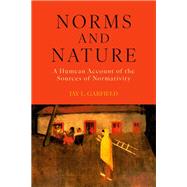
- ISBN: 9780197839768 | 0197839762
- Cover: Hardcover
- Copyright: 1/9/2026
In The Treatise of Human Nature, Hume argued that we are normative animals, and he treats human nature in the context of, and on a par with, non-human nature. In Norms and Nature, Jay L. Garfield argues that Hume was right, and to demonstrate and explain this fact, he shows how the animals that we are construct norms, learn to conform to norms, and how we are transformed by the normative structures we come to inhabit. Garfield draws on the work of the American psychologist Edward Chace Tolman, who argued that the intentional could be naturalized without reducing it to the non-intentional and in the thought of those philosophers who shared that vision, including those in the Prasangika Madhyamaka tradition, as well as Nietzsche, Schopenhauer, Dewey, Wittgenstein, and Sellars.
Norms and Nature examines what it is to be human in the full sense of the term: to be an organism that only comes to self-consciousness in virtue of being thrown into a world already pregnant with meaning; meaning that can only be constituted collectively. To be human is to be one whose very being is constituted both by the web of customs into which we are born. In this investigation, Garfield shows how much of our existence as persons depends upon a set of interlocking virtuous spirals that enable the development of the communities that make normativity possible, and on the development of the sets of norms that enable those communities to sustain themselves. Garfield argues that it is this very aspect of our nature which provides hope that we can improve ourselves. Norms and Nature offers a rich sense of our place as a species in the natural world, and of our places as individuals in the context of the social order that we create, and that in turn create us.
Norms and Nature examines what it is to be human in the full sense of the term: to be an organism that only comes to self-consciousness in virtue of being thrown into a world already pregnant with meaning; meaning that can only be constituted collectively. To be human is to be one whose very being is constituted both by the web of customs into which we are born. In this investigation, Garfield shows how much of our existence as persons depends upon a set of interlocking virtuous spirals that enable the development of the communities that make normativity possible, and on the development of the sets of norms that enable those communities to sustain themselves. Garfield argues that it is this very aspect of our nature which provides hope that we can improve ourselves. Norms and Nature offers a rich sense of our place as a species in the natural world, and of our places as individuals in the context of the social order that we create, and that in turn create us.

Please wait while the item is added to your bag...



Review