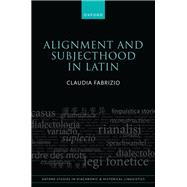
Claudia Fabrizio, Professor of Historical and Theoretical Linguistics, Pegaso Digital University
Claudia Fabrizio is Professor of Historical and Theoretical Linguistics at Pegaso Digital University. She obtained her degree from Sapienza University of Rome and subsequently pursued advanced studies and research in Geneva, Naples, Manchester, Leiden, and Oxford. Her research primarily focuses on diachronic morphosyntax, with particular emphasis on Latin and Italo-Romance languages. Her work explores various aspects of linguistic structure, including argument marking and valency, the syntax of non-finite verb forms (such as infinitives and participles), the morphology and semantics of nominalization and verbalization, and semantically-driven coding phenomena within nominative-accusative systems, particularly in relation to alignment and subjecthood. She has also contributed to the study of the history of linguistic thought and the cultural reconstruction of the Indo-European context.
PART I. THEORETICAL PREMISES1. The typology of argument alignment2. On the notion of subject3. Subjecthood in Latin: Coding and behavioral features4. Subjecthood in Latin: Marked constructions5. Subjecthood in Latin: A diachronic accountPART II. THREE CASE STUDIES6. The syntax of subject infinitives7. On some puzzling past participles8. Non-nominative subjects in Latin
What is included with this book?
The New copy of this book will include any supplemental materials advertised. Please check the title of the book to determine if it should include any access cards, study guides, lab manuals, CDs, etc.
The Used, Rental and eBook copies of this book are not guaranteed to include any supplemental materials. Typically, only the book itself is included. This is true even if the title states it includes any access cards, study guides, lab manuals, CDs, etc.
Please wait while the item is added to your bag...

Review
Flag Review
×
Digital License
You are licensing a digital product for a set duration. Durations are set forth in the product description,
with "Lifetime" typically meaning five (5) years of online access and permanent download to a supported device. All licenses are non-transferable.