

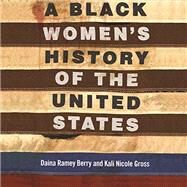
- ISBN: 9780807001998 | 0807001996
- Cover: Paperback
- Copyright: 3/16/2021
The award-winning Revisioning American History series continues with this “groundbreaking new history of Black women in the United States” (Ibram X. Kendi)—the perfect companion to An Indigenous People’s History of the United States and An African American and Latinx History of the United States.
An empowering and intersectional history that centers the stories of African American women across 400+ years, showing how they are—and have always been—instrumental in shaping our country.
In centering Black women’s stories, two award-winning historians seek both to empower African American women and to show their allies that Black women’s unique ability to make their own communities while combatting centuries of oppression is an essential component in our continued resistance to systemic racism and sexism. Daina Ramey Berry and Kali Nicole Gross offer an examination and celebration of Black womanhood, beginning with the first African women who arrived in what became the United States to African American women of today.
A Black Women’s History of the United States reaches far beyond a single narrative to showcase Black women’s lives in all their fraught complexities. Berry and Gross prioritize many voices: enslaved women, freedwomen, religious leaders, artists, queer women, activists, and women who lived outside the law. The result is a starting point for exploring Black women’s history and a testament to the beauty, richness, rhythm, tragedy, heartbreak, rage, and enduring love that abounds in the spirit of Black women in communities throughout the nation.
An empowering and intersectional history that centers the stories of African American women across 400+ years, showing how they are—and have always been—instrumental in shaping our country.
In centering Black women’s stories, two award-winning historians seek both to empower African American women and to show their allies that Black women’s unique ability to make their own communities while combatting centuries of oppression is an essential component in our continued resistance to systemic racism and sexism. Daina Ramey Berry and Kali Nicole Gross offer an examination and celebration of Black womanhood, beginning with the first African women who arrived in what became the United States to African American women of today.
A Black Women’s History of the United States reaches far beyond a single narrative to showcase Black women’s lives in all their fraught complexities. Berry and Gross prioritize many voices: enslaved women, freedwomen, religious leaders, artists, queer women, activists, and women who lived outside the law. The result is a starting point for exploring Black women’s history and a testament to the beauty, richness, rhythm, tragedy, heartbreak, rage, and enduring love that abounds in the spirit of Black women in communities throughout the nation.

Please wait while the item is added to your bag...


