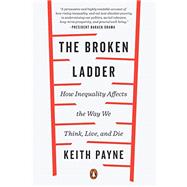
The Broken Ladder

, by
The Broken Ladder by Payne, Keith, 9780143128908
Note: Supplemental materials are not guaranteed with Rental or Used book purchases.
  • ISBN: 9780143128908 | 0143128906
  • Cover: Paperback
  • Copyright: 5/1/2018

Purchase Options
  • Rent

    (Recommended)

    $7.42
    Term
    Due
    Price
    *This item is part of an exclusive publisher rental program and requires an additional convenience fee. This fee will be reflected in the shopping bag.
  • Buy Used

    In Stock Usually Ships in 24 Hours.

    $12.83
  • Buy New

    Usually Ships in 3-5 Business Days

    $17.80
  • eBook

    eTextBook from VitalSource Icon

    Available Instantly

    Online: 1825 Days

    Downloadable: Lifetime Access

    *To support the delivery of the digital material to you, a digital delivery fee of $3.99 will be charged on each digital item.
    $8.99*
"A persuasive and highly readable account." —President Barack Obama

“Brilliant. . . . an important, fascinating read arguing that inequality creates a public health crisis in America.” Nicholas Kristof, New York Times

The Broken Ladder is an important, timely, and beautifully written account of how inequality affects us all.” —Adam Alter, New York Times bestselling author of Irresistible and Drunk Tank Pink

A timely examination by a leading scientist of the physical, psychological, and moral effects of inequality. 

The levels of inequality in the world today are on a scale that have not been seen in our lifetimes, yet the disparity between rich and poor has ramifications that extend far beyond mere financial means. In The Broken Ladder psychologist Keith Payne examines how inequality divides us not just economically; it also has profound consequences for how we think, how we respond to stress, how our immune systems function, and even how we view moral concepts such as justice and fairness.

Research in psychology, neuroscience, and behavioral economics has not only revealed important new insights into how inequality changes people in predictable ways but also provided a corrective to the flawed view of poverty as being the result of individual character failings. Among modern developed societies, inequality is not primarily a matter of the actual amount of money people have. It is, rather, people's sense of where they stand in relation to others. Feeling poor matters—not just being poor. Regardless of their average incomes, countries or states with greater levels of income inequality have much higher rates of all the social maladies we associate with poverty, including lower than average life expectancies, serious health problems, mental illness, and crime.
 
The Broken Ladder explores such issues as why women in poor societies often have more children, and why they have them at a younger age; why there is little trust among the working class in the prudence of investing for the future; why people's perception of their social status affects their political beliefs and leads to greater political divisions; how poverty raises stress levels as effectively as actual physical threats; how inequality in the workplace affects performance; and why unequal societies tend to become more religious. Understanding how inequality shapes our world can help us better understand what drives ideological divides, why high inequality makes the middle class feel left behind, and how to disconnect from the endless treadmill of social comparison.