

- ISBN: 9780199751846 | 0199751846
- Cover: Hardcover
- Copyright: 9/8/2011
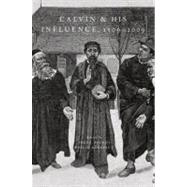
The year 2009 marked Calvin's 500th birthday. This volume collects papers initially written as the plenary addresses for the largest international scholarly conference held in connection with this anniversary, organized in Geneva by the Institute of Reformation History. The organizers chose as theme for the conference ''Calvin and His Influence 1509-2009,'' hoping to stimulate reflection about what Calvin's ideas and example have meant across the five centuries since his lifetime, as well as about how much validity the classic interpretations that have linked his legacy to fundamental features of modernity such as democracy, capitalism, or science still retain. In brief, the story that emerges from the book is as follows: In the generations immediately after Calvin's death, he became an authority whose writings were widely cited by leading ''Calvinist'' theologians, but he was in fact just one of several Reformed theologians of his generation who were much appreciated by these theologians. In the eighteenth century, his writings began to be far less frequently cited. Even in Reformed circles what was now most frequently recalled was his action during the Servetus affair, so that he now started to be widely criticized in those quarters of the Reformed tradition that were now attached to the idea of toleration or the ideal of a free church. In the nineteenth century, his theology was recovered again in a variety of different contexts, while scholars established the monument to his life and work that was theOpera Calviniand undertook major studies of his life and times. Church movements now claimed the label ''Calvinist'' for themselves with increasing insistence and pride. (The term had largely been a derogatory label in the sixteenth and seventeenth centuries.) The movements that identified themselves as Calvinist or were identified as such by contemporaries nonetheless varied considerably in the manner in which they drew upon and understood Calvin's thought.Calvin and His Influenceshould become the starting point for further scholarly reflection about the history of Calvinism, from its origin to the present.

Please wait while the item is added to your bag...



Review