

Character Evidence in the Criminal Trial
, by Redmayne, Mike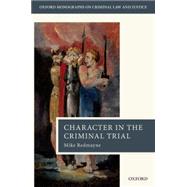
- ISBN: 9780199228898 | 0199228892
- Cover: Hardcover
- Copyright: 5/19/2015
If a defendant is on trial for a crime such as burglary, to what extent should the fact that he has a previous conviction for burglary feature in his trial? Should the prosecution be allowed to tell the jury about the previous conviction as evidence that the defendant is more likely to have committed burglary? Should the judge give the defendant a longer sentence because he has a previous conviction? These are the fundamental questions examined in Character in the Criminal Trial.
Including an in-depth analysis of the character evidence provisions of the Criminal Justice Act 2003, this book assesses the arguments for and against using character evidence to prove a defendant's guilt. It explores the sentencing provisions in the same Act, as well as the general use of criminal record and other character evidence to aggravate and mitigate sentence.
Issues examined in the course of the book include: psychological and philosophical debates about the stability of character; criminological research on recidivism and the nature of criminal careers; ethical debates about the use of prior behavior to prove current or future offending; the process of reasoning underlying the use of bad character evidence; whether bad character evidence is prejudicial; and the use of risk assessment instruments to classify offenders as dangerous. By combining insights from law, psychology, criminology, and philosophy, Redmayne reassesses the use of character in the criminal trial and reflects on the significance of the law's increasing emphasis on character.
Including an in-depth analysis of the character evidence provisions of the Criminal Justice Act 2003, this book assesses the arguments for and against using character evidence to prove a defendant's guilt. It explores the sentencing provisions in the same Act, as well as the general use of criminal record and other character evidence to aggravate and mitigate sentence.
Issues examined in the course of the book include: psychological and philosophical debates about the stability of character; criminological research on recidivism and the nature of criminal careers; ethical debates about the use of prior behavior to prove current or future offending; the process of reasoning underlying the use of bad character evidence; whether bad character evidence is prejudicial; and the use of risk assessment instruments to classify offenders as dangerous. By combining insights from law, psychology, criminology, and philosophy, Redmayne reassesses the use of character in the criminal trial and reflects on the significance of the law's increasing emphasis on character.

Please wait while the item is added to your bag...



Review