

- ISBN: 9780197828816 | 0197828817
- Cover: Hardcover
- Copyright: 9/1/2026
A powerful analysis of China's bid for global pre-eminence and what it means for the future of international politics.
Xi Jinping's pledge to achieve "the China Dream of national rejuvenation" by 2050 captures the ambition driving China's current global strategy. While the phrase may be characteristically vague, its implications are far-reaching--shaping how Chinese leaders engage with the world and envision China's place within it.
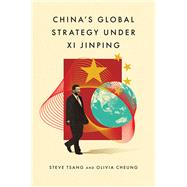
In China's Global Strategy under Xi Jinping, Steve Tsang and Olivia Cheung offer a clear and compelling account of how China is seeking to reshape the international order on its own terms. Drawing on decades of political evolution, they introduce a powerful new framework--Sino-centric party-state realism--to explain the ideological, political, and strategic logic behind China's foreign policy under Xi.
The authors apply this framework across three key domains: global diplomacy, technology and the economy, and geopolitics. At the heart of Xi's vision is a revival of the ancient tianxia model of global leadership, in which China becomes the world's pre-eminent power--not by replacing the United States as global hegemon, but by being widely embraced as a force for good. This model suggests a relatively passive form of leadership, yet one that still aims to fundamentally reshape global norms and institutions.
Tsang and Cheung also examine the internal drivers of this strategy, showing how domestic political imperatives and party ideology shape China's external behavior. The result is a nuanced and timely analysis of a rising power with global ambitions--and the potential for great power conflict.
Essential reading for anyone seeking to understand China's evolving role in world affairs, this book offers a vital lens on one of the most consequential geopolitical shifts of our time.
Xi Jinping's pledge to achieve "the China Dream of national rejuvenation" by 2050 captures the ambition driving China's current global strategy. While the phrase may be characteristically vague, its implications are far-reaching--shaping how Chinese leaders engage with the world and envision China's place within it.
In China's Global Strategy under Xi Jinping, Steve Tsang and Olivia Cheung offer a clear and compelling account of how China is seeking to reshape the international order on its own terms. Drawing on decades of political evolution, they introduce a powerful new framework--Sino-centric party-state realism--to explain the ideological, political, and strategic logic behind China's foreign policy under Xi.
The authors apply this framework across three key domains: global diplomacy, technology and the economy, and geopolitics. At the heart of Xi's vision is a revival of the ancient tianxia model of global leadership, in which China becomes the world's pre-eminent power--not by replacing the United States as global hegemon, but by being widely embraced as a force for good. This model suggests a relatively passive form of leadership, yet one that still aims to fundamentally reshape global norms and institutions.
Tsang and Cheung also examine the internal drivers of this strategy, showing how domestic political imperatives and party ideology shape China's external behavior. The result is a nuanced and timely analysis of a rising power with global ambitions--and the potential for great power conflict.
Essential reading for anyone seeking to understand China's evolving role in world affairs, this book offers a vital lens on one of the most consequential geopolitical shifts of our time.

Please wait while the item is added to your bag...



Review