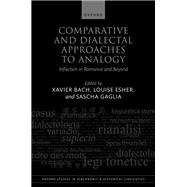
Xavier Bach, Associate Professor of Morphology and its Interface with Syntax, Laboratoire Cognition, Langues, Langages, Ergonomie, CNRS and Université Toulouse Jean Jaurès,Louise Esher, Chargé de Recherche, Langage, langues et cultures d'Afrique (LLACAN), CNRS,Sascha Gaglia, Professor of Romance Linguistics, Department of Romance Philology, Freie Universität Berlin
Xavier Bach is Associate Professor of Morphology and its Interface with Syntax at the Université Toulouse-Jean Jaurès, and a researcher in the CNRS research laboratory CLLE (Cognition, Langues, Langage, Ergonomie). He works on inflectional typology, particularly on inflection classes and non-canonical phenomena such as suppletion and heteroclisis, as well as gender, periphrasis, and negation. He specializes in (Gallo)-Romance varieties, as well as in Austronesian languages of West Papua.
Louise Esher is a CNRS researcher based at LLACAN (Langage, Langues et Cultures d'Afrique). Their research focuses on the relationships between inflectional change and the holistic structure of inflectional systems, with particular attention to analogical change and autonomous morphology. Louise is co-editor of the Manuel de linguistique occitane (with Jean Sibille; De Gruyter, 2024) and has contributed to works including The Oxford Research Encyclopaedia of Linguistics and The Cambridge Handbook of Romance Linguistics.
Sascha Gaglia is Professor of Romance Linguistics at the Freie Universität Berlin. He works on morpho-phonological, syntactic, and pragmatic phenomena from both a diachronic and synchronic perspective, with a particular interest in clitics, politeness, and paradigmatic analogy. While his main language focus is on Italian and Italian dialects, he has also published work on French, Spanish, and Rhaeto-Romance.
1. Introduction, Xavier Bach, Louise Esher, and Sascha GagliaPart I: Inflectional patterns and their interaction2. Contamination as a cause of abnormal inflexion class changes in 'Alpine' Romance, and what it tells us about word structure, Martin Maiden3. Additive analogy maximizes left-edge identity of roots in Romance, Xavier Bach4. Analogical extension of stress patterns in artificial language learning, Judith MeinschaeferPart II. Directionality and frequency effects5. Modal verbs in Norwegian (and Swedish): Between analogical regularization and analogical irregularization?, Hans-Olav Enger6. The verbs dire 'say' and venire 'come' as 'leader words' in Italo-Romance, Franck Floricic7. Productive identities spanning recurrent partials and whole word forms, Louise EsherPart III. Processes and representations of analogy8. Morphological analogy as whole-word replacement: Revisiting the counter-evidence, Eugen Hill9. Take-over as analogical change in the creation and avoidance of syncretism and homonymy, Marc-Olivier Hinzelin10. Overabundance as an epiphenomenon: Competing forms or competing paradigms?, John Charles Smith11. Morphomes, models, emergence, and the mind, Erich Round
What is included with this book?
The New copy of this book will include any supplemental materials advertised. Please check the title of the book to determine if it should include any access cards, study guides, lab manuals, CDs, etc.
The Used, Rental and eBook copies of this book are not guaranteed to include any supplemental materials. Typically, only the book itself is included. This is true even if the title states it includes any access cards, study guides, lab manuals, CDs, etc.
Please wait while the item is added to your bag...

×
Digital License
You are licensing a digital product for a set duration. Durations are set forth in the product description,
with "Lifetime" typically meaning five (5) years of online access and permanent download to a supported device. All licenses are non-transferable.