

Concerning Dust and Ashes Affects of Horror in the Hebrew Bible
, by Grafius, Brandon R.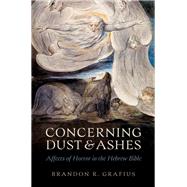
- ISBN: 9780197641750 | 019764175X
- Cover: Hardcover
- Copyright: 6/16/2026
In the Hebrew Bible, encounters with the divine are always laced with a mixture of awe and terror. This holds true for priestly interactions, for Job's theophanic confrontation, and for many descriptions offered by the psalmists. In some instances, these encounters are experienced by the characters within the narrative, and presented to the reader, as an experience of the sublime, in which marvel and fear mingle together, but are eventually resolved into the emotion of wonder. In other instances, fear overwhelms the divine encounter and turns it into an experience of transcendent terror. This sublime horror is the focus of Concerning Dust and Ashes, which explores how the Bible uses horror to introduce ideas that our rational minds would reject, allowing us to explore our relationship to the cosmos, the unfriendly spaces of the world, and the nature of the divine.
Brandon R. Grafius guides the reader through different stories and moments in the Bible where terror plays a defining role, considering the different world views and potential realities implied by these encounters: be it a reassurance of humanity's importance in the span of the cosmos or instead the implication of divine indifference and the isolation of humanity in an uncaring universe. Grafius also draws on H. P. Lovecraft's ideas of cosmic horror and how they might be translated into a theistic worldview. Ultimately, the book suggests that even the most horrific of Biblical stories engender understanding in the character--and reader--about the world and their place within it.
Brandon R. Grafius guides the reader through different stories and moments in the Bible where terror plays a defining role, considering the different world views and potential realities implied by these encounters: be it a reassurance of humanity's importance in the span of the cosmos or instead the implication of divine indifference and the isolation of humanity in an uncaring universe. Grafius also draws on H. P. Lovecraft's ideas of cosmic horror and how they might be translated into a theistic worldview. Ultimately, the book suggests that even the most horrific of Biblical stories engender understanding in the character--and reader--about the world and their place within it.

Please wait while the item is added to your bag...



Review