

Debating Scotland Issues of Independence and Union in the 2014 Referendum
, by Keating, Michael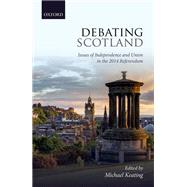
- ISBN: 9780198789819 | 0198789815
- Cover: Hardcover
- Copyright: 3/26/2017
On 18 September 2014, Scotland held a referendum on the question: Should Scotland be an independent country? This is a most unusual event in modern democracies and engaged the political class, civil society, and the general public to an unprecedented degree, leading to an 85 per cent turnout in the final vote. This was an occasion to debate not just the narrow constitutional issue but the future of the nation, including the economy, social welfare, defence and security, and Scotland's place in Europe and the world.
Debating Scotland comes from a team of researchers who observed the debates from close-up and engaged with both sides, with the media and with the public in analyzing the issues, while remaining neutral on the independence question. The book examines the main issues at stake, how they were presented, and how they evolved over the course of the campaign. The editors and contributing authors explore the ways both independence and union were framed, the economic issues, the currency, welfare, defence and security, the European Union, and how the example of small independent states was used. The volume concludes with an analysis of voter responses, based upon original survey research, which demonstrates how perceptions of risk and uncertainty on the main issues played a key role in the outcome.
Debating Scotland comes from a team of researchers who observed the debates from close-up and engaged with both sides, with the media and with the public in analyzing the issues, while remaining neutral on the independence question. The book examines the main issues at stake, how they were presented, and how they evolved over the course of the campaign. The editors and contributing authors explore the ways both independence and union were framed, the economic issues, the currency, welfare, defence and security, the European Union, and how the example of small independent states was used. The volume concludes with an analysis of voter responses, based upon original survey research, which demonstrates how perceptions of risk and uncertainty on the main issues played a key role in the outcome.

Please wait while the item is added to your bag...



Review