

Description and Explanation of the Most Important Anunnaki, Babylonian, Sumerian, Akkadian, Assyrian, Phoenician Slabs, Seals, Inscriptions, Statues, Tablets and Secret Symbols
, by Yerma, Ulema Kira; Doudnikova, Angelique; Lumiere, Ulema Germain; Po, Ulema Meli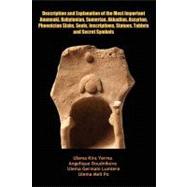
- ISBN: 9781451530315 | 1451530315
- Cover: Paperback
- Copyright: 3/8/2010
The first book ever written about Babylon, Sumer, Phoenicia, Hittites and the Anunnaki slabs, tablets/inscriptions. Each artifact is described, translated and explained. A major masterpiece! The world's first documentation on the existence of the extraterrestrial gods who created our civilizations. 260 photos & illustrations. It was said, "A picture is worth a thousand words." True, very true! But what if a picture is hard to understand or does not explain what we are looking at? This happens quite often in the vast literature and history of ancient civilizations. Especially, when the inscriptions on or under the pictures or illustrations are written in a language we do not understand, such as Cuneiform, Ugaritic, Akkadian, Sumerian, Phoenician, and similar writing systems of the ancient Middle and Near East. In addition, there are thousands of slabs, cylinder seals, tablets, and obelisks of ancient and/or vanished civilizations, which are hard to decipher. And in many instances, no pertaining inscriptions or texts were ever provided to explain what the statues, figurines, slabs and tablets represent. To fully understand the scriptures, texts, epics and literature of Mesopotamia, Sumer, Assyria, Chaldea, Phoenicia, Ugarit, and the Anunnaki, one must become familiar with the meaning (Hidden or revealed) of the inscriptions, the symbolism in intricate details, and the religious-artistic-philosophical nuances of the art of the era. This requires authentic description, translation and explanation of: * Ancient symbols * Archeological finds * Maps * Seals/Slabs * Cuneiform inscriptions/writings * Statues/figurines * Carving/Illustrations/ * Familiarity with historical sites, ruins, and cities * Linguistic analogies *.This book was written to deal with and to explain all these concerns, and to provide the readers with sufficient guidance, translation and explanation of major archeological finds, ranging from a figurine to a massive monument.

Please wait while the item is added to your bag...


