

Disrupt the “Not-Telling” Gatekeeping Issues on the way to Tenure and Promotion for Black Women at HBCUs, MSIs, and PWIs
, by Hollis, Leah P.; Blackshear, Tara B.; Muñiz, Raquel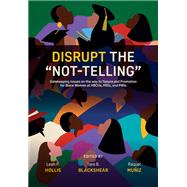
- ISBN: 9780197789933 | 0197789935
- Cover: Hardcover
- Copyright: 1/28/2026
Black women earn 67% of all doctorates earned by Blacks in the United States, yet their presence in higher education as tenured professors remains dismally low. This drastic gap between educational attainment and employment can largely be traced to the structural constraints of both racism and sexism and continues to create obstacles for talented Black women scholars and researchers.
In Disrupt the "Not-Telling", Leah P. Hollis, Tara B. Blackshear, and Raquel Muñiz have gathered an expert group of Black scholars to examine why Black women have been excluded from tenured roles in higher education institutions. Broken into two sections, the first focuses on empirical research and narratives from Black women in predominantly white institutions, detailing their tenure and promotion experiences. The second unit sheds light on the challenges faced within Historically Black Colleges and Universities (HBCUs) and Minority Serving Institutions (MSIs). Employing a range of theoretical approaches, case studies, and phenomenological approaches, the book analyzes higher education processes and their inequitable impact on Black women.
Beyond highlighting the problem, this volume offers theoretically sound approaches and recommends solutions that can assist colleges and universities in creating and maintaining an equitable path to tenure.
In Disrupt the "Not-Telling", Leah P. Hollis, Tara B. Blackshear, and Raquel Muñiz have gathered an expert group of Black scholars to examine why Black women have been excluded from tenured roles in higher education institutions. Broken into two sections, the first focuses on empirical research and narratives from Black women in predominantly white institutions, detailing their tenure and promotion experiences. The second unit sheds light on the challenges faced within Historically Black Colleges and Universities (HBCUs) and Minority Serving Institutions (MSIs). Employing a range of theoretical approaches, case studies, and phenomenological approaches, the book analyzes higher education processes and their inequitable impact on Black women.
Beyond highlighting the problem, this volume offers theoretically sound approaches and recommends solutions that can assist colleges and universities in creating and maintaining an equitable path to tenure.

Please wait while the item is added to your bag...



Review