

Ernest Lapointe & Quebec's Influence on Canada's Foreign Policy
, by MacFarlane, John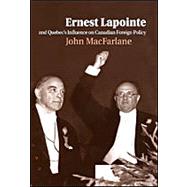
- ISBN: 9780802044877 | 0802044875
- Cover: Hardcover
- Copyright: 7/1/1999
Currently the stakes are higher than ever for anglophone Canada to recognize and understand the extent and nature of Quebec's role in the shaping of the nation. John MacFarlane's revision of anglophone history is a compelling step in that process. Historians often emphasize how, during both the difficult inter-war years and the Second World War, the Liberal government of Mackenzie King successfully reconciled the needs of majority rule with the recognition of minority voice, particularly in foreign affairs. How did a consummate anti-Catholic, who did not even speak French, manage to acknowledge and accommodate the vastly different demands of the French-speaking population? Issues such as conscription, relations with Great Britain, and Canadian policy at the League of Nations threatened to divide Canada when the instability of the international scene urgently required a unified voice. Ernest Lapointe, officially the minister of justice (1924-5, 1926-30, 1935-41) and minister of fisheries (1921-4), represented francophone Quebeckers in the federal cabinet. His ability to influence and reflect the views of the Quebec population, his loyalty to Mackenzie King, and in some cases, his threats of resignation, awarded him considerable weight in many external affairs questions. Yet his influence, as a major figure of twentieth century Canadian political history, is one of the least understood. Analysing seventeen foreign policy decisions, the author uncovers Ernest Lapointe's relationship with King, and the voice of Quebec represented by his skilful interceptions.

Please wait while the item is added to your bag...



Review