

Essential Food Preserving The Comprehensive Guide to Canning, Freezing, Drying, and Fermenting Vegetables, Fruits, Grains, Nuts, Beans, Meat, Dairy, and Eggs
, by Skinner, Julia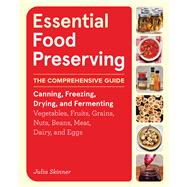
- ISBN: 9781635868029 | 1635868025
- Cover: Hardcover
- Copyright: 5/19/2026
The must-have reference guide to all the methods used for preserving every type of food—from canning vegetables to making fruit wines to curing meat—with more than 250 recipes and creative zero-waste options.
Featuring clear step-by-step instructions and original photography, Essential Food Preserving is organized by type of food, with multiple preservation methods for each one, so you can preserve almost anything in a variety of ways, including:
Featuring clear step-by-step instructions and original photography, Essential Food Preserving is organized by type of food, with multiple preservation methods for each one, so you can preserve almost anything in a variety of ways, including:
- Canning
- Fermenting
- Brewing beer, wine, and vinegar
- Pickling
- Making jams and jellies
- Drying
- Smoking
- Cold storage
Julia Skinner is the author of Our Fermented Lives and The Fermentation Oracle, and the founder and director of Root, a fermentation and food history company that bridges the gap between modern people and historic food. She has worked as a professional fermenter for restaurants and private clients, and has extensive experience as a food history researcher. Her work has been featured in Vox, Eater, Business Insider, and Buzzfeed. She splits her time between Atlanta, Georgia and Ireland, and her website is: https://juliacskinner.com.
Introduction: Why preserve?
Building a low waste kitchen
Low waste tips, why/how of reducing food waste.
Storage guidelines
Storing ingredients by type
(Will use the same categories as outlined below in recipe section, e.g. best practices for soft, high-moisture fruits versus more shelf-stable ingredients like dried beans and grains.)
Building your pantry or root cellar
(a short best practices section on stocking a pantry and low maintenance root cellar, not a comprehensive guide. Will include references to other titles that cover this topic more thoroughly).
Root cellaring guidelines broken down by type of food
Methods and Equipment
An overview of each common type of food preservation and the equipment used for each.
(Canning, fermenting, drying, freezing, pressure canning, jam and preserve making, freezer/refrigerator jams, quick pickles, salt curing)
(equipment guidelines will emphasize as many equipment options as possible, from low tech to high tech).
Labeling your preserves (name, date, ingredients)
Preserving Basics
Assessing your harvest
(taking stock of what you have from your home garden or your local market or farm stand. How much of each type of food/how much do you plan to have total).
Deciding how to preserve food based on how you eat
(e.g. if you want to eat something the same day, maybe don't freeze it. If you have more freezer than cabinet space, maybe don't can as much).
Preserving as a sustainable habit
(building a plan, working small tasks into your daily life, etc.)
Examples: keeping a container in the freezer to fill with food scraps for stock or planning a few minutes a day to harvest from the garden.
Stocking your preserving pantry
Ingredients you'll need to preserve (e.g. vinegar, sugar, etc.) with guidance and proper storage advice
Advice on buying in bulk
Advice on sourcing and storing preserving equipment (canning jars, etc.)
The Recipes
A note about the recipe sections: For each section (e.g. roots, shoots, brassicas) there will be 5-10 master recipes that can be adapted to each ingredient in that section. Each ingredient (e.g. carrots or parsnips) will then have guidance for flavoring using those master recipes, guidance on which works best for that vegetable, and any other considerations.
In total, a section will have 5-10 master recipes plus another 10-20 ingredient-specific recipes. I expect the total number of recipes in the book to be around 150.
Vegetables
Intro/overall guidance to working with vegetables
Roots
Root vegetable master recipes (e.g. quick pickles, fermenting, freezing and drying guidelines, common waste parts e.g. carrot top pesto)
Hearty root veggies (carrot, parsnip, etc.)
More porous root veggies
Potatoes
Shoots
Master recipes for greens and herbs
Tough greens (collards, kale)
Tender greens (arugula, spinach)
Tender-stemmed fresh herbs
Woody-stemmed fresh herbs
Tops and tips (repurposing carrot greens, turnip greens, greens parts of other foods)
Brassicas
Master recipes for brassicas
Brussels Sprouts
Cabbage
Napa Cabbage
Kohlrabi
Bok Choy
Mustards
Broccoli and Romanesco Broccoli
Broccolini
Cauliflower
Peppers
Pepper master recipes
Small hot peppers
Bell peppers
Jalapenos
Poblanos and other large peppers
Tomatoes
Tomato master recipes
paste
large heirloom varieties
cherry
Curcurbits (we can rename this section, I just like this name)
Master recipes
Winter squash
Summer squash
Cucumbers
Mushrooms
Master recipes
High moisture content
Low moisture content
Other mushrooms (reishi, for example, more of a tea or stock mushroom than a mushroom you eat by itself)
Other vegetables
Briefly mention ideas for ways to work with other vegetables not mentioned here, pointing to master recipes from other sections as needed
Fruit
Introduction to working with fruit
Berries
Master recipes for berries
Ideas for different types of berries as well as texture (e.g. blueberries that are very soft and about to go bad, versus tart, firm ones)
Stone fruit
Master recipes for stone fruit
Guidance for soft or bruised fruit and for more firm fruit (like apricots or out-of-season peaches)
Melons
Master recipes for melons
Preserving melon fruit
Preserving rinds (e.g. watermelon rind pickles)
Grapes
Master recipes for grapes
Pickles, drinks, etc. with different flavor ideas for red and green
Citrus
Master recipes for citrus
Preserving citrus
Using citrus in preserving other foods (e.g. to acidify canned vegetables)
Tropical fruits and foraged fruits
Brief section with lists of ideas, references recipes elsewhere as needed
Grains, nuts, and legumes
Guidelines for drying and storing grains, nuts, and legumes
Guidelines for cooking grains, nuts, and legumes
Preserving ready to eat meals: Since grains and beans are shelf-stable when dried (and nuts lasts a long time provided you keep them from going rancid), this section primarily focuses on canning soups, making things like miso paste or tempeh, or other creative ways to use grains and beans as part of one's preservation strategy
Meat and dairy
Meat and eggs
Drying
Pickling
Pressure canning
Freezing
Working with uncommon cuts
(many people I speak with have started sourcing more meat from local farmers and hunters after the supply chain issues in 2020, but are often stuck with what to do with uncommon cuts, offal, etc. This section will offer ideas for preserving the kinds of uncommon cuts one might get from a farmer or hunter. This will be a small section mostly focused on pointing people to resources, but feels important for a comprehensive preserving volume).
Eggs
Pickling, salt curing yolks, freezing
Water glassing eggs
(this preserving technique has become much more common recently with the rise in backyard chicken keeping. Since we're wanting to make this comprehensive, I think it's important to at least briefly touch on the debates around safety and offer some resources to learn more).
Using up meat scraps (e.g. in stock)
Dairy
Yogurt and cheese
Freezing
Using up dairy waste (e.g. cheesemaking whey, cheese rinds)
Other preserving experiments
e.g. foraged foods (e.g. birch bark syrup, green pinecone syrup), other techniques not covered elsewhere (like making fruit leather from kombucha SCOBY).
This is a good place to highlight the creative work being done by folks like Pascal Baudar, or Kirsten Shockey's flower yeasts. It will be a short section, but the point is more to inspire people to feel inspired to explore and say "wow I had no idea there was such a world of possibilities out there!" than it is to just give a list of ideas.
Preserving in community
Sharing the bounty
(arranging a community swap meet or a preserve-focused dinner party)
Community food preservation
(e.g. kimchi making, pickling in church kitchens, etc.: Briefly mentions that these are rooted in history but primarily focuses on the how-to of hosting your own food preservation gathering today)
Feeding communities
Guidelines for donating preserves to food pantries, free fridges, etc. (e.g. what do they typically accept? Things to consider when donating like food allergies and food safety)
Finding community resources to donate produce and preserves, share knowledge, etc (e.g. community gardens)
Sourcing locally
Preserving food in community also means supporting community with our food purchasing habits: This will offer guidance on finding local sources for produce but also for other ingredients as applicable (like meats and grains).
Indexes
These are tables/charts or just written indexes people can use as a ready reference to find foods alphabetically, to find different techniques, and to see which techniques work well for each type of food (and which don't).
Example indexes:
Alphabetical lists
Techniques
Table showing what techniques work best with different ingredients and which don't
Resources for further learning
Books, websites, studies, etc. but also websites/social accounts of trusted experts (like Kirsten Shockey)
What is included with this book?
The New copy of this book will include any supplemental materials advertised. Please check the title of the book to determine if it should include any access cards, study guides, lab manuals, CDs, etc.
The Used, Rental and eBook copies of this book are not guaranteed to include any supplemental materials. Typically, only the book itself is included. This is true even if the title states it includes any access cards, study guides, lab manuals, CDs, etc.

Please wait while the item is added to your bag...



Review
Flag Review
×
Digital License
You are licensing a digital product for a set duration. Durations are set forth in the product description, with "Lifetime" typically meaning five (5) years of online access and permanent download to a supported device. All licenses are non-transferable.
More details can be found here.