

The Executive in the Constitution Structure, Autonomy, and Internal Control
, by Daintith, Terence; Page, Alan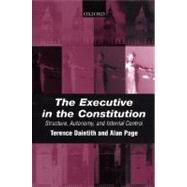
- ISBN: 9780198268703 | 019826870X
- Cover: Hardcover
- Copyright: 10/28/1999
The Executive in the Constitution: Structure, Autonomy, and Internal Control is the first constitutional and legal analysis of the inner workings of the executive for many years. It aims to provoke a reappraisal, by constitutional lawyers, of the place of the executive within the constitution,by exploring an area hitherto largely neglected in constitutional law: the legal foundations of the powers and structure of the executive, and the mechanisms through which the centre of the executive seeks to control the actions of departments. The authors, both pre-eminent in the field off constitutional law, show that the machinery of executive co-ordination and control is no less crucial a dimension of the constitutional order than the external machinery of democratic and legal control. These external parliamentary and judicialcontrols depend for their effectiveness on the executive's ability to control itself. The plural structure of the executive, however, makes the co-ordination and control of its component parts a highly problematical pursuit. Against the background of an analysis of the executive's legal structure,the book examines in detail the controls governing departmental access to staffing, financial, and legal resources, analysing the relationship between these internal controls and the external machinery of democratic and legal control, and showing how the machinery of internal control has been shapedby the structure of the executive branch. The organization of the executive and the way it controls the actions of its departments has changed significantly in recent year. This book explores the impact of the machinery if executive co-ordination and control of the ambitious public service reform project which has been pursued bysuccessive governments over the last twenty years, as well as of changes in the wider constitutional framework, including those stemming from the United Kingdom's membership of the European Union and the growth of judicial review. It shows how public service reforms, judicial review, and Europeanlaw are changing not just the inner life of the executive government but its place in the constitution as well.

Please wait while the item is added to your bag...



Review