

History, Abolition, and the Ever-Present Now in Antebellum American Writing
, by Insko, Jeffrey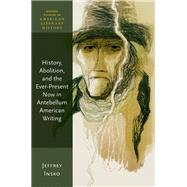
- ISBN: 9780198825647 | 0198825641
- Cover: Hardcover
- Copyright: 2/13/2019
History, Abolition, and the Ever-Present Now in Antebellum American Writing examines the meaning and possibilities of the present and its relationship to history and historicity in a number of literary texts; specifically, the writings of several figures in antebellum US literary history—some, but not all of whom, associated with the period's romantic movement. Focusing on nineteenth-century writers who were impatient for social change, like those advocating for the immediate emancipation of slaves, as opposed to those planning for a gradual end to slavery, the book recovers some of the political force of romanticism.
Through close readings of texts by Washington Irving, John Neal, Catharine Sedgwick, Frederick Douglass, Ralph Waldo Emerson, and Herman Melville, the book argues that these writers practiced forms of literary historiography that treat the past as neither a reflection of present interests nor as an irretrievably distant 'other', but as a complex and open-ended interaction between the two. In place of a fixed and linear past, these writers imagine history as an experience rooted in a fluid, dynamic, and ever-changing present. The political, philosophical, and aesthetic disposition Insko calls 'romantic presentism' insists upon the present as the fundamental sphere of human action and experience-and hence of ethics and democratic possibility.
Through close readings of texts by Washington Irving, John Neal, Catharine Sedgwick, Frederick Douglass, Ralph Waldo Emerson, and Herman Melville, the book argues that these writers practiced forms of literary historiography that treat the past as neither a reflection of present interests nor as an irretrievably distant 'other', but as a complex and open-ended interaction between the two. In place of a fixed and linear past, these writers imagine history as an experience rooted in a fluid, dynamic, and ever-changing present. The political, philosophical, and aesthetic disposition Insko calls 'romantic presentism' insists upon the present as the fundamental sphere of human action and experience-and hence of ethics and democratic possibility.

Please wait while the item is added to your bag...



Review