

Indian Cities or Suburbs? Trends and Causes of Suburbanization
, by Seetharam Sridhar, Kala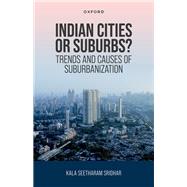
- ISBN: 9780198958116 | 0198958110
- Cover: Hardcover
- Copyright: 10/28/2025
Despite the focus on urbanization as an important theme, the suburbanization of India has received relatively less attention. Indian Cities or Suburbs? is the first comprehensive work on suburbanization in India, exploring its complex dynamics in Indian cities. It addresses critical research questions regarding the suburbanization of individuals, households, and employment, examining regional variations, contributing factors, and resultant impacts. Utilizing granular data from the Global Human Settlements Layer (GHSL) at the sub-kilometre grid level for a hundred Indian cities, Kala demonstrates the applicability of the downward-sloping population density function to India's urban context. The findings reveal that as of 2015, India's population was predominantly suburban (82%) compared to urban (33%). Southern and urbanized states exhibit greater sprawl relative to the national average, whereas slow-growing states are more compact. Employment decentralization surpasses population suburbanization, with half of all jobs concentrated within a five-kilometre radius of the urban core. The book also underscores the negative environmental impacts of sprawl, including challenges in the provision of essential services such as water supply, healthcare, education, and air quality maintenance.

Please wait while the item is added to your bag...



Review