

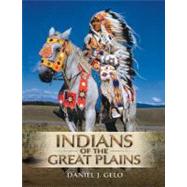
- ISBN: 9780131773899 | 0131773895
- Cover: Paperback
- Copyright: 6/29/2011
For undergraduate courses in the History of Native Americans, Introduction to American Indian Studies or Native American Anthropology. Indians of the Great Plains,written by Daniel J. Gelo of The University of Texas at San Antonio, is a text that emphasizes that Plains societies and cultures are continuing, living entities. Through topical exploration, it provides contemporary coverage on recent scholarship and seeks to bring readers up-to-date with historical and cultural developments of the 20thand 21stcenturies. In addition, it contains wide and balanced coverage of the many different tribal groups; including Canadian and southern populations of the Sioux and their close neighbors.
In This Section:
I. Author Bio
II. Author Letter
I. Author Bio
Daniel J. Gelo is Professor of Anthropology and Dean of the College of Liberal and Fine Arts at the University of Texas at San Antonio, where he has taught and researched since 1988. Gelo holds Ph.D., M.Phil. M.A., and B.A. degrees in anthropology from Rutgers University. His scholarship concerns cognitive anthropology and the symbolic analysis of expressive forms such as myth, ritual, language, music, and visual materials. He is a recognized authority on the culture of the Plains Indians and has conducted fieldwork with the Comanche people of southwest Oklahoma since 1982. Gelo is also the only anthropologist to have conducted fieldwork in all four main Indian communities in Texas: the Tigua, Kickapoo, and Alabama-Coushatta reservations, and the urban Indian enclave in Dallas.
His publications include Comanche Vocabulary (University of Texas Press, 1995), Comanches in the New West, 1896-1908 (with Stanley Noyes, University of Texas Press, 1999), and Texas Indian Trails (with Wayne L. Pate, Republic of Texas Press, 2003). Other publications include articles, commentary, and reviews for the American Indian Quarterly, Journal of American Folklore, Southwestern Historical Quarterly, Visual Anthropology Review, Western Folklore, Ethnohistory, Plains Anthropologist, Current Anthropology, Great Plains Research Ethnomusicology, American Anthropologist, and the Journal of American History, as well as the article on Native North Americans in the Encyclopedia of Cultural Anthropology and the premier entry on the Comanches in the Human Relations Area Files. Gelo researched and co-wrote three award-winning film documentaries on Texas Indians for public television: Circle of Life: The Alabama-Coushatta Indians (1991); Big City Trail: The Urban Indians of Texas (1992); and People of the Sun: The Tiguas of Ysleta (1992). Gelo is also the only anthropologist to co-author a national elementary textbook series, contributing to six national and state social studies texts for grades 3-6 published by Silver Burdett Ginn in 1997. His work has been funded by the Wenner-Gren Foundation for Anthropological Research, Inc., the National Endowment for the Humanities, and Humanities Texas. Professional affiliations include the Council of Colleges of Arts and Sciences, American Folklore Society, American Society for Ethnohistory, and Plains Anthropological Society. Among his recognitions, Gelo was a Henry Rutgers Scholar and was named Ambassador to the Comanche Nation; he has won the UTSA President's Distinguished Achievement Award for Creative Activity and the University of Texas System Chancellor's Council Outstanding Teaching Award.
II. Author Letter
Dear Colleague,
If you have been waiting for a complete, up-to-date, and engaging textbook about the Plains Indians I believe that Indians of the Great Plains will meet your needs.
I’m sure you enjoy teaching college courses about Plains Indians as much as I do. The people and their traditions are so vibrant, so colourful, so intrinsically interesting to students. But I’m sure too that you share my frustration when trying to put together a suitably comprehensive and meaningful syllabus about these splendid cultures. There hasn’t been a comprehensive and current text.
At my school, the University of Texas at San Antonio, the upper-division anthropology survey course on Plains Indians draws an enthusiastic but very diverse audience. There are undergraduates of all grade levels and occasionally grad students. Some are anthropology or history majors, but many are business, education, or science students looking for an interesting elective. They all come from a variety of ethnic and regional backgrounds and with varied understanding about culture and Native Americans.
I needed a single text that speaks to all of these students in plain language about the kinds of questions they bring to class: How old are the Plains tribes? How did the Indians defeat Custer? What is it like to live on a reservation today? Who is really an Indian? I wrote Indians of the Great Plains to fill this need. Concurrently, the book tackles key concepts in theory, method, and ethics, from kinship terms to archaeological revolutions and graves protection law; and there is also plenty of history about the contributions of leading Indian and non-Indian authorities–all so the social science and Native American Studies majors can pursue further the ideas they have been exploring in prior classes.
Students have needed a book in which they can hear the people they are learning about. In Indians of the Great Plains, direct quotations, song texts, and stories continually reintroduce the Native voice. Native language words are frequently included and explained, inviting readers to venture into the cognitive world of the Native Plains. In class I am keen on emphasizing that Indian cultures are alive today–not frozen in time–and persistent in addressing common assumptions and stereotypes, and you will see this approach throughout the book.
Also, I like my course organization to be smooth and simple, so I needed a text that was designed practically. Nowadays it is difficult to ask students to buy several books for one class. Indians of the Great Plains is thorough enough to work without supplementary readings if you desire. And the chapter structure lends itself to one topic per week over a long semester.
If you don’t teach a Plains Indian survey, but perhaps other Native American courses, or just sometimes need information on these fascinating societies, you will find Indians of the Great Plains to be a handy and reliable reference to keep on your office bookshelf. It is meant to contribute to your success as a teacher and scholar. If you ever have questions or suggestions about the book I would be delighted to hear from you at daniel.gelo@utsa.edu.
Sincerely,
Dan Gelo
University of Texas–San Antonio
Preface
Chapter 1: The Great Plains
The Plains Landscape
The Plains Culture Area
Sources
Chapter Summary
Chapter 2: Plains Prehistory
The Archaeological Record
The Paleoindians
Origins and Antiquity
The Archaic
The Late Prehistoric
The Historic Period
The Historic Tribes and their Origins
Sources
Chapter Summary
Chapter 3: Bison, Horse, and Hoe
The Bison
Extermination of the Buffalo
Other Game Animals
The Horse
Indian Horsemanship
The Horse as an Influence on Culture
Wild and Domestic Plants
Sources
Chapter Summary
Chapter 4: Tribal Organization
Tribes, Bands, and Clans
The Notion of Tribe
Bands
Descent Groups: Lineages and Clans
Phratries and Moieties
Native Naming
Associations
Men’s Associations
Women’s Associations
Religious Societies
Leadership
Chiefs
Councils
Crime, Law, and Dispute Settlement
Examples of Organization: The Crows and Comanches
The Crows
The Comanches
Sources
Chapter Summary
Chapter 5: Family and Social Life
Kinship
Kin Terms
Kin Term Systems
Family
The Life Cycle
Birth, Infancy, and Childhood
Puberty
Courtship and Marriage
Absconding and Divorce
Adulthood
Old Age
Death and Burial
Gender and Sexuality
Stereotypes
Gender Roles and Relations
Sexuality
Berdaches
Sources
Chapter Summary
Chapter 6: Material Culture and Decorative Arts
Dwellings
The Tipi
The Earth Lodge
The Grass Lodge
The Wigwam
Other Structures
Tools and Weapons
Garden Tools
Basketry and Pottery
Cradles
Boats and Rafts
War and Hunting Gear
Clothing
Personal Adornment
Metalwork
Decorative Arts
Quillwork and Beadwork
Carving in Wood and Stone
Painting and Drawing
Sources
Chapter Summary
Chapter 7: Music and Dance
Sources
Chapter Summary
Chapter 8: Oral Traditions
Sources
Chapter Summary
Chapter 9: Religious Fundamentals
Power
Spiritual Beings
Thunder
Water Monsters
Giants and Dwarves
Ghosts
Animal Spirits
Transcendent Spirits
Cosmovision
The Great Spirit
Sacred Symbols
The Vision Quest
Medicine Men and Women
Sources
Chapter Summary
Chapter 10: Group Rituals
The Massaum
The Okipa
Medicine Bundle Renewals
The Skidi Pawnee Morning Star Ceremony
Sacred Arrow and Pipe Ceremonies
The Sun Dance
The Study of Sun Dance Diffusion
Sun Dance Survival and Revival
The Ghost Dance
The Ghost Dance and the Origins of Religion
Yuwipi
Peyotism
Origins of Plains Peyotism
The Peyote Ritual
Peyote Symbolism
Peyote Politics and Law
The Native American Church
The Peyote Trade
Indian Christianity
Dual Religious Participation
Religion and Native Identity
Sources
Chapter Summary
Chapter 11: External Relations
Warfare
Scouting and Trailing
Signals and Signs
The Face of Indian Battle
Coup and Scalping
Cannibalism
Captives
Trade and Diplomacy
The Calumet Ceremony
Trade Languages
Sign Language
Indian Diplomats
Intertribal Marriage
Sources
Chapter Summary
Chapter 12: Life through the Twentieth Century
Conquest of the Plains
War in the South
War in the North
Early Reservation Life
Allotment
Boarding Schools
Period of Reform
Indian Reorganization Act
Period of Termination
Period of Self-Determination
Sources
Chapter Summary
Chapter 13: Contemporary Plains Indian Life
Life in Indian Country
Landscape
Work and Play
Social Relations
The Economic Picture
Contemporary Issues
Tribal Sovereignty
Gaming
Health
Land Claims and Natural Resources
Religious Freedom
Sacred Sites
Graves Protection and Repatriation
Mascots
Media Imagery and Cultural Florescence
Identity
Sources
Chapter Summary
Bibliography
Index
What is included with this book?
The New copy of this book will include any supplemental materials advertised. Please check the title of the book to determine if it should include any access cards, study guides, lab manuals, CDs, etc.
The Used, Rental and eBook copies of this book are not guaranteed to include any supplemental materials. Typically, only the book itself is included. This is true even if the title states it includes any access cards, study guides, lab manuals, CDs, etc.

Please wait while the item is added to your bag...



Review
Flag Review
×
Digital License
You are licensing a digital product for a set duration. Durations are set forth in the product description, with "Lifetime" typically meaning five (5) years of online access and permanent download to a supported device. All licenses are non-transferable.
More details can be found here.