

Institutions for Climate Finance States, Markets, and Foundations for Effective Performance
, by Clegg, Liam; Galindo-Gutiérrez, Julio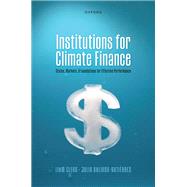
- ISBN: 9780198965282 | 0198965281
- Cover: Hardcover
- Copyright: 8/24/2026
Effective climate transition requires accelerated financing from public and private sources, and improved coordination between states and markets. Through Institutions for Climate Finance, the authors offer a forensic interrogation of structures capable of supporting effective response to the era-defining climate challenge. Combining high intellectual ambition and systematic engagement with scholarship across a range of social science traditions, they deliver insights that are analytically precise and which carry far-reaching implications.
The book demonstrates how political institutions including government composition and electoral out-turns impact domestic climate spending, how national cultural values provide social institutional foundations for climate aid, and how economic institutional mechanisms including Central Bank asset purchases and underwriters' operations influence the performance of green bond markets. Clegg and Galindo-Gutiérrez cover technical nuance in an accessible format, introducing readers to the detail of government spending decisions and financial market dynamics that will determine the scale of climate financing released to support more sustainable ways of living and working. Overall, the book makes the case for an 'evidence-based optimism' on climate financing; by showing what works and identifying areas for improvement, advocacy and accountability efforts can be refined. Through highlighting the indeterminacy of current dynamics, Institutions for Climate Finance reminds us that the future of climate financing is yet to be written, leaving considerable space for our individual and collective agency to leave its mark.
The book demonstrates how political institutions including government composition and electoral out-turns impact domestic climate spending, how national cultural values provide social institutional foundations for climate aid, and how economic institutional mechanisms including Central Bank asset purchases and underwriters' operations influence the performance of green bond markets. Clegg and Galindo-Gutiérrez cover technical nuance in an accessible format, introducing readers to the detail of government spending decisions and financial market dynamics that will determine the scale of climate financing released to support more sustainable ways of living and working. Overall, the book makes the case for an 'evidence-based optimism' on climate financing; by showing what works and identifying areas for improvement, advocacy and accountability efforts can be refined. Through highlighting the indeterminacy of current dynamics, Institutions for Climate Finance reminds us that the future of climate financing is yet to be written, leaving considerable space for our individual and collective agency to leave its mark.

Please wait while the item is added to your bag...



Review