

- ISBN: 9780198783930 | 0198783930
- Cover: Hardcover
- Copyright: 12/20/2016
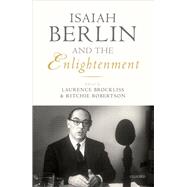
Isaiah Berlin (1909-97) was recognized as Britain's most distinguished historian of ideas. Many of his essays discussed thinkers of what this book calls the 'long Enlightenment' (from Vico in the eighteenth century to Marx and Mill in the nineteenth, with Machiavelli as a precursor). Yet he is particularly associated with the concept of the 'Counter-Enlightenment', comprising those thinkers (Herder, Hamann, and even Kant) who in Berlin's view reacted against the Enlightenment's naive rationalism, scientism and progressivism, its assumption that human beings were basically homogeneous and could be rendered happy by the remorseless application of scientific reason. Berlin's 'Counter-Enlightenment' has received critical attention, but no-one has yet analysed the understanding of the Enlightenment on which it rests. Isaiah Berlin and the Enlightenment explores the development of Berlin's conception of the Enlightenment, noting its curious narrowness, its ambivalence, and its indebtedness to a specific German intellectual tradition. Contributors to the book examine his comments on individual writers, showing how they were inflected by his questionable assumptions, and arguing that some of the writers he assigned to the 'Counter-Enlightenment' have closer affinities to the Enlightenment than he recognized. By locating Berlin in the history of Enlightenment studies, this book also makes a contribution to defining the historical place of his work and to evaluating his intellectual legacy.

Please wait while the item is added to your bag...


