

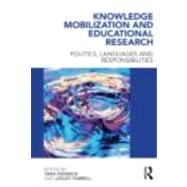
- ISBN: 9780415614658 | 0415614651
- Cover: Nonspecific Binding
- Copyright: 10/11/2011
How can educational research have more impact? What processes of knowledge exchange are most effective for increasing the uses of research results? How can research-produced knowledge be better #xE2;#xAC;#xDC;mobilized#xE2;#xAC;" among users such as practicing educators, policy makers, and the public communities? These sorts of questions are commanding urgent attention in educational discourses and research policies now circulating around the world. This attention has been translated into powerful material exercises that shape what is considered to be worthwhile research and how research is funded, recognized, and assessed. Yet precisely what activities constitute effective knowledge mobilization, or even what is meant by #xE2;#xAC;#xDC;moving knowledge#xE2;#xAC;", remains unclear. What politicsare at play in determining knowledge #xE2;#xAC;#xDC;impact#xE2;#xAC;" across radically different contexts? Who determines what counts as impact, and for what purposes? How are #xE2;#xAC;#xDC;results#xE2;#xAC;" of educational research separated from its participants and processes? In addition knowledge mobilization also invokes debates about the languagesthrough which knowledge is constructed, policy processes are enacted, and research unfolds. This volume is unique in bringing together these wide-ranging issues of knowledge mobilization in education. The volume editors critically analyse these complex issues and also describe various efforts of knowledge mobilization and their effects. While the contributors themselves speak from diverse material, occupational and theoretical locations. Leading scholars in Canada, the US, the UK, and Australia bring disciplinary perspectives from law, digital media studies, museum studies, journalism and policy-making as well as fields of education. Some speak from Anglo-#xE2;#xAC;#xDC;Western#xE2;#xAC;" perspectives but others such as Phan Le Ha (Vietnamese), Rui Yang (Chinese) and Dolores van der Wey (Haida/West Coat Salish First Nations) speak from Asian, Indigenous and diasporic locations.

Please wait while the item is added to your bag...



Review