

Learning from Leonardo Decoding the Notebooks of a Genius
, by Capra, Fritjof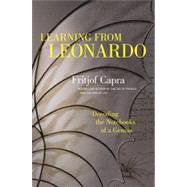
- ISBN: 9781609949891 | 1609949897
- Cover: Hardcover
- Copyright: 11/19/2013
“This remarkable exposition of Leonardo’s work” illuminates how he was centuries ahead of his time—and the lessons we can learn from his style of thought (Edward O. Wilson, Harvard University).
Leonardo da Vinci was a brilliant artist, scientist, engineer, mathematician, architect, and inventor. But he was also, Fritjof Capra argues, a profoundly modern man. Capra’s decade-long study of Leonardo’s fabled notebooks reveal him as a “systems thinker” centuries before the term was coined. Leonardo believed the key to understanding the world was in perceiving the connections between phenomena and the larger patterns formed by those relationships.
Seeing the world as a dynamic, integrated whole, Leonardo often used concepts from one area to illuminate problems in another. For example, his studies of the movement of water informed his ideas about how landscapes are shaped, how sap rises in plants, how air moves over a bird’s wing, and how blood flows in the human body. His observations of nature enhanced his art, his drawings were integral to his scientific studies and architectural designs.
Capra describes seven defining characteristics of Leonardo da Vinci’s genius and includes a list of over forty discoveries Leonardo made that weren’t rediscovered until centuries later. His overview of Leonardo’s thought follows the organizational scheme Leonardo himself intended to use if he ever published his notebooks. So in a sense, this is Leonardo’s science as he himself would have presented it.
Leonardo da Vinci was a brilliant artist, scientist, engineer, mathematician, architect, and inventor. But he was also, Fritjof Capra argues, a profoundly modern man. Capra’s decade-long study of Leonardo’s fabled notebooks reveal him as a “systems thinker” centuries before the term was coined. Leonardo believed the key to understanding the world was in perceiving the connections between phenomena and the larger patterns formed by those relationships.
Seeing the world as a dynamic, integrated whole, Leonardo often used concepts from one area to illuminate problems in another. For example, his studies of the movement of water informed his ideas about how landscapes are shaped, how sap rises in plants, how air moves over a bird’s wing, and how blood flows in the human body. His observations of nature enhanced his art, his drawings were integral to his scientific studies and architectural designs.
Capra describes seven defining characteristics of Leonardo da Vinci’s genius and includes a list of over forty discoveries Leonardo made that weren’t rediscovered until centuries later. His overview of Leonardo’s thought follows the organizational scheme Leonardo himself intended to use if he ever published his notebooks. So in a sense, this is Leonardo’s science as he himself would have presented it.

Please wait while the item is added to your bag...



Review