

Linguistic Bodies The Continuity between Life and Language
, by Di Paolo, Ezequiel A.; Cuffari, Elena Clare; De Jaegher, Hanne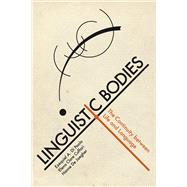
- ISBN: 9780262038164 | 0262038161
- Cover: Hardcover
- Copyright: 11/6/2018
A novel theoretical framework for an embodied, non-representational approach to language that extends and deepens enactive theory, bridging the gap between sensorimotor skills and language.
Linguistic Bodies offers a fully embodied and fully social treatment of human language without positing mental representations. The authors present the first coherent, overarching theory that connects dynamical explanations of action and perception with language. Arguing from the assumption of a deep continuity between life and mind, they show that this continuity extends to language. Expanding and deepening enactive theory, they offer a constitutive account of language and the co-emergent phenomena of personhood, reflexivity, social normativity, and ideality. Language, they argue, is not something we add to a range of existing cognitive capacities but a new way of being embodied. Each of us is a linguistic body in a community of other linguistic bodies.
The book describes three distinct yet entangled kinds of human embodiment, organic, sensorimotor, and intersubjective; it traces the emergence of linguistic sensitivities and introduces the novel concept of linguistic bodies; and it explores the implications of living as linguistic bodies in perpetual becoming, applying the concept of linguistic bodies to questions of language acquisition, parenting, autism, grammar, symbol, narrative, and gesture, and to such ethical concerns as microaggression, institutional speech, and pedagogy.

Please wait while the item is added to your bag...



Review