

Menander Dyskolos Introduction, Edition, and Commentary
, by Petrides, Antonis K.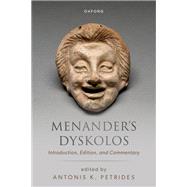
- ISBN: 9780198814344 | 0198814348
- Cover: Hardcover
- Copyright: 10/30/2026
Menander's Dyskolos: Introduction, Edition, and Commentary presents a new critical edition, together with an extensive introduction and commentary, of Dyskolos (The Cantankerous Man)—the only play of Menander (342-290 BC), antiquity's most acclaimed comic playwright, to survive virtually complete. Long lost but miraculously rediscovered in the sands of Egypt, the comedy premiered in Athens in 317/16 BC but only reached modern audiences after its first publication in 1958.
At its heart stands Knemon, a reclusive misanthrope in the remote Attic deme of Phyle, whose sour temperament makes life unbearable for those around him, above all his daughter. When the god Pan rewards the girl's piety with a wealthy urban suitor, an inevitable clash unfolds: how can a man who despises all mankind consent to his daughter's marriage with an 'idle' city youth? The play becomes a sophisticated study of character, society, and the fraught interplay of urban and rural life in late classical Athens.
Except for works aimed at students or general readers, this is the first full-scale commentary on the play in any language since 1973. A modern and interdisciplinary reimagining of the commentary genre, it combines rigorous philology—textual criticism, metre, language, realia, and stagecraft—with contemporary theoretical perspectives, bringing Dyskolos vividly to life for today's scholars and demonstrating its continuing power to engage, provoke, and delight.

Please wait while the item is added to your bag...



Review