

The Montessori Difference Considering the Evidence
, by Lillard, Angeline Stoll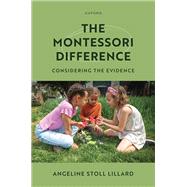
- ISBN: 9780198899853 | 0198899858
- Cover: Hardcover
- Copyright: 11/27/2026
Montessori is the oldest and most widespread alternative educational system available today. In the United States alone, Montessori is implemented in thousands of schools, including over 600 public ones. Its main claim is that the pedagogy is closely aligned with developmental science and that given the appropriate environment, infants and children develop themselves. Yet studies of the outcomes of this form of education have thus far been scattered, with no intensive qualitative review to inform parents, teachers, administrators, researchers, and school districts of what we know about Montessori's outcomes.
The Montessori Difference examines and synthesizes the existing body of research on the outcomes of Montessori education to consider the efficacy of a Montessori education. It introduces the main tenets of Montessori education; reviews academic outcomes in literacy, math, and social-emotional outcomes like executive function and wellbeing; and offers a primer on how to interpret research, including meta-analyses, the pros and cons of different research designs to study school outcomes, and effect sizes. In doing so, it dispels some of the myths of Montessori and considers the challenges and opportunities inherent in the broader implementation of Montessori schooling. Pointing out both weaknesses and strengths in the existing literature, Angeline Stoll Lillard weaves together evidence from the highest quality studies to conclude when and how the research suggests this century-old way of educating makes a difference in the outcomes of children.
The Montessori Difference examines and synthesizes the existing body of research on the outcomes of Montessori education to consider the efficacy of a Montessori education. It introduces the main tenets of Montessori education; reviews academic outcomes in literacy, math, and social-emotional outcomes like executive function and wellbeing; and offers a primer on how to interpret research, including meta-analyses, the pros and cons of different research designs to study school outcomes, and effect sizes. In doing so, it dispels some of the myths of Montessori and considers the challenges and opportunities inherent in the broader implementation of Montessori schooling. Pointing out both weaknesses and strengths in the existing literature, Angeline Stoll Lillard weaves together evidence from the highest quality studies to conclude when and how the research suggests this century-old way of educating makes a difference in the outcomes of children.

Please wait while the item is added to your bag...



Review