

Moses Maimonides A Very Short Introduction
, by Brann, Ross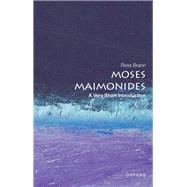
- ISBN: 9780197536988 | 0197536980
- Cover: Paperback
- Copyright: 8/28/2025
Moses Maimonides, a scientist, physician, philosopher, rabbinic scholar, and communal leader, was perhaps the most imposing Jewish figure of the pre-modern age. Yet, more than eight centuries after his death, the meaning of his life and his work remains contested.
This Very Short Introduction to Moses Maimonides surveys Maimonides' many intellectual, literary, and professional ventures. Born in Islamic Cordoba, he ultimately settled in Cairo, where he served as jurist and civic leader and a highly esteemed physician with responsibilities at the Fatimid and Ayyubid courts, even as he deepened his philosophical-theological pursuits. He moved seamlessly between specialized, private, and public Jewish and Muslim spheres.
Indeed, his written works traverse multiple disciplines, employ several literary genres, and address various elite and popular audiences. Beginning with his Commentary on the Mishnah and culminating in the seminal Mishneh Torah (Code of Jewish Law), Maimonides reorganized and systematized all of rabbinic law. He regarded the attainment of wisdom as the ultimate goal of human life. Like many Jewish and Muslim religious intellectuals of the period Maimonides was preoccupied with the problem posed by the language religious tradition deploys in referring to God. His Guide for the Perplexed treats this central challenge to knowing God's absolute, unchanging unity, as well as defining the purpose of divine law and supposed interruption of the natural order in the form of prophecy and miracles.
This book organizes Maimonides' thinking and writings thematically and puts his works into dialogue with one another. It proposes that the key to engaging Maimonides on his own terms is to understand he applied a rationalist's regimen characteristic of his scientific research and practice of medicine to all of his life's work: he observed and studied a problem, diagnosed it, and then prescribed a remedy for it whether the concern was physical, metaphysical, spiritual, intellectual, or social in nature.
His Arabic and Hebrew contributions to each of his fields of inquiry were translated and disseminated far and wide and found a prominent place among religious and scientific intellectuals in the Latin West and throughout the Jewish and Islamic worlds.
This Very Short Introduction to Moses Maimonides surveys Maimonides' many intellectual, literary, and professional ventures. Born in Islamic Cordoba, he ultimately settled in Cairo, where he served as jurist and civic leader and a highly esteemed physician with responsibilities at the Fatimid and Ayyubid courts, even as he deepened his philosophical-theological pursuits. He moved seamlessly between specialized, private, and public Jewish and Muslim spheres.
Indeed, his written works traverse multiple disciplines, employ several literary genres, and address various elite and popular audiences. Beginning with his Commentary on the Mishnah and culminating in the seminal Mishneh Torah (Code of Jewish Law), Maimonides reorganized and systematized all of rabbinic law. He regarded the attainment of wisdom as the ultimate goal of human life. Like many Jewish and Muslim religious intellectuals of the period Maimonides was preoccupied with the problem posed by the language religious tradition deploys in referring to God. His Guide for the Perplexed treats this central challenge to knowing God's absolute, unchanging unity, as well as defining the purpose of divine law and supposed interruption of the natural order in the form of prophecy and miracles.
This book organizes Maimonides' thinking and writings thematically and puts his works into dialogue with one another. It proposes that the key to engaging Maimonides on his own terms is to understand he applied a rationalist's regimen characteristic of his scientific research and practice of medicine to all of his life's work: he observed and studied a problem, diagnosed it, and then prescribed a remedy for it whether the concern was physical, metaphysical, spiritual, intellectual, or social in nature.
His Arabic and Hebrew contributions to each of his fields of inquiry were translated and disseminated far and wide and found a prominent place among religious and scientific intellectuals in the Latin West and throughout the Jewish and Islamic worlds.

Please wait while the item is added to your bag...



Review