

The Neoliberal Turn in Regulating Islam The Paradoxes of Neutrality and Legitimacy in France and the UK
, by El-Yousfi, Muhammad Amin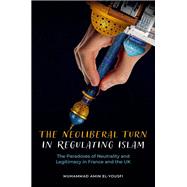
- ISBN: 9780197821312 | 0197821316
- Cover: Hardcover
- Copyright: 11/6/2026
Drawing on over two years of relational ethnography, featuring real-life case studies, interviews, and observations in mosques and madrasahs, The Neoliberal Turn in Regulating Islam explores the transformation of mosques and Islamic institutions in France and the UK under the pressures of neoliberal bureaucratisation.
El Yousfi's analysis of the neoliberal turn-the importation of formalities, rules and procedures, and the development of manuals, toolkits and guidelines derived from private enterprise into the traditional religious sphere-foregrounds the intertwinement of state policies and the efforts of local Muslim leaders. Documenting these top-down and bottom-up processes reveals two paradoxes: the paradox of neutrality and the paradox of legitimacy. The first one refers to the state's claim of neutrality despite its constant regulation of the socio-religious field. The second paradox lies in local Muslim leaders' efforts to acquire legitimacy through neoliberal bureaucratisation whilst simultaneously resisting state attempts to control mosques and madrasahs. Through an exploration of these paradoxes, this monograph offers a compelling narrative about the challenges and strategies of Muslim communities in navigating faith, identity, and bureaucracy in two distinct yet interconnected contexts.
El Yousfi's analysis of the neoliberal turn-the importation of formalities, rules and procedures, and the development of manuals, toolkits and guidelines derived from private enterprise into the traditional religious sphere-foregrounds the intertwinement of state policies and the efforts of local Muslim leaders. Documenting these top-down and bottom-up processes reveals two paradoxes: the paradox of neutrality and the paradox of legitimacy. The first one refers to the state's claim of neutrality despite its constant regulation of the socio-religious field. The second paradox lies in local Muslim leaders' efforts to acquire legitimacy through neoliberal bureaucratisation whilst simultaneously resisting state attempts to control mosques and madrasahs. Through an exploration of these paradoxes, this monograph offers a compelling narrative about the challenges and strategies of Muslim communities in navigating faith, identity, and bureaucracy in two distinct yet interconnected contexts.

Please wait while the item is added to your bag...



Review