

The Phenomenon Großmann Encounters Artistic Photography Cat. Museum für Neue Kunst Freiburg in cooperation with Kunststiftung DZ Bank
, by Greulich, Andreas; Großmann, Rudolf; Leber, Christina; Litz, Christine; Mezler, Dietmar; Herda, Isabel; Bauer-Zhao, Lisa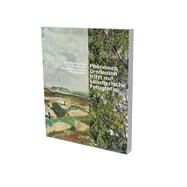
- ISBN: 9783864423987 | 3864423988
- Cover: Paperback
- Copyright: 3/1/2023
Rudolf Groß mann (1882– 1941) was a renowned painter and graphic artist, and a feared chronicler on account of his rather pointed writings. He drew life in the big city in portraits, and café and street scenes in a richly facetted manner; during the 1910s and 1920s, he published texts and illustrations in magazines such as Simplicissimus, and also illustrated books for authors, among them Joachim Ringelnatz and Erich Kä stner. Today, Rudolf Groß mann is known only among those with a keen interest and expertise in the 1920s. Based on the question of why he has largely been forgotten, the exhibition and book seize the opportunity to initiate a dialogue between his work and recent photographic works by contemporary artists. His paintings and graphic oeuvre from the collection of the Museum fü r Neue Kunst Freiburg will be juxtaposed with photographic positions from the collection of the Kunststiftung DZ BANK. It is Rudolf Groß mann’ s portrait drawings in particular that bear a certain photographic aspect, and thus can be combined in a meaningful way with the various works, for instance, by Wolfgang Tillmans, Sven Johne, Nan Goldin, and Gisè le Freund. Moreover, Barbara Probst’ s multiperspective view or Beate Gü tschow’ s spatial constructions reveal, when they are placed in context with Rudolf Groß mann’ s graphic scenes, that there is a tremendous atmospheric proximity despite the leap in time of more than a hundred years. Rudolf Groß mann is characterized by a certain equidistance to the popular styles of his time; while this did distinguish his work and established a closeness to photography, it was not enough though to protect him from persecution by the National Socialists; he, too, was considered to be degenerate, and thereafter retreated to his native city of Freiburg.

Please wait while the item is added to your bag...



Review