

Philippine languages and education reform Papers in honor of Ricardo Ma. Duran Nolasco
, by Payne, Thomas E.; Arzadon, Mercedes E.; Igcalinos, Antonio D.; Arzadon, Mercedes E.; Igcalinos, Antonio D.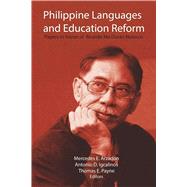
- ISBN: 9789719452751 | 9719452757
- Cover: Paperback
- Copyright: 4/2/2026
Philippine Languages and Education Reform: Papers in honor of Ricardo Ma. Duran Nolasco is a comprehensive, two-part scholarly volume celebrating the intellectual legacy of Dr. Ricardo Ma. Duran Nolasco—renowned linguist, educator, and leading advocate for Mother Tongue–Based Multilingual Education (MTB-MLE) in the Philippines. Edited by Mercedes E. Arzadon, Antonio D. Igcalinos, and Thomas E. Payne, the book brings together 27 chapters, all written by professional linguists, educators, researchers, and policy practitioners whose work intersects with Philippine languages or multilingual education. The contributors represent a distinguished roster of scholars and educators, many of whom have conducted extensive fieldwork or played key roles in national education reform.
The volume is organized into two major sections, each reflecting a core dimension of Dr. Nolasco's scholarly contributions:
Section I: Community-based Linguistic Descriptions of Individual Philippine Languages. This section contains 18 chapters devoted to detailed, data-driven descriptions of minoritized and understudied Philippine languages. Topics include phonology, morphosyntax, verbal morphology, case marking, serial verb constructions, historical linguistics, and grammatical change. The languages examined span the archipelago—including Kabulowan, Bisaja, Tagalog, Tboli, Tëduray, Itneg Inlaud, Kapampangan, Bantayanon, Umiray Dumaget, Porohanon, Waray, Masbatenyo, Kagayanen, Sama-Bajaw, Buhidic Mangyan, and others.
These chapters embody Dr. Nolasco's commitment to communication-based linguistics, rigorous fieldwork, and analyses grounded in the conceptual categories of the speech communities themselves. They demonstrate the extraordinary diversity of Philippine languages and reflect a careful effort to document languages that are endangered or previously underdescribed.
Section II: Studies of Multilingual Education (MLE) Policy and Practice in the Philippines, comprises 9 chapters devoted to MTB-MLE, language policy, literacy, orthography development, and the sociopolitical dynamics of educational reform. These contributions explore:
• the historical and political foundations of MTB-MLE
• the implementation experiences of teachers and schools
• community advocacy for equitable and inclusive education
• the relationship between literacy, multimodal learning, and mother-tongue instruction
• how MTB-MLE contributes to national identity formation
This volume will be of particular interest to linguists, educators, policymakers, and literacy specialists concerned with MTB-MLE, language rights, and pedagogical innovation. The volume underscores the belief—central to Dr. Nolasco's life work—that linguistic diversity is a cultural treasure and that mother-tongue education is essential for equity, cognitive development, and national identity.
The volume is organized into two major sections, each reflecting a core dimension of Dr. Nolasco's scholarly contributions:
Section I: Community-based Linguistic Descriptions of Individual Philippine Languages. This section contains 18 chapters devoted to detailed, data-driven descriptions of minoritized and understudied Philippine languages. Topics include phonology, morphosyntax, verbal morphology, case marking, serial verb constructions, historical linguistics, and grammatical change. The languages examined span the archipelago—including Kabulowan, Bisaja, Tagalog, Tboli, Tëduray, Itneg Inlaud, Kapampangan, Bantayanon, Umiray Dumaget, Porohanon, Waray, Masbatenyo, Kagayanen, Sama-Bajaw, Buhidic Mangyan, and others.
These chapters embody Dr. Nolasco's commitment to communication-based linguistics, rigorous fieldwork, and analyses grounded in the conceptual categories of the speech communities themselves. They demonstrate the extraordinary diversity of Philippine languages and reflect a careful effort to document languages that are endangered or previously underdescribed.
Section II: Studies of Multilingual Education (MLE) Policy and Practice in the Philippines, comprises 9 chapters devoted to MTB-MLE, language policy, literacy, orthography development, and the sociopolitical dynamics of educational reform. These contributions explore:
• the historical and political foundations of MTB-MLE
• the implementation experiences of teachers and schools
• community advocacy for equitable and inclusive education
• the relationship between literacy, multimodal learning, and mother-tongue instruction
• how MTB-MLE contributes to national identity formation
This volume will be of particular interest to linguists, educators, policymakers, and literacy specialists concerned with MTB-MLE, language rights, and pedagogical innovation. The volume underscores the belief—central to Dr. Nolasco's life work—that linguistic diversity is a cultural treasure and that mother-tongue education is essential for equity, cognitive development, and national identity.

Please wait while the item is added to your bag...



Review