

The Philosophy of Camus Through a Kierkegaardian Lens
, by Rudd, Anthony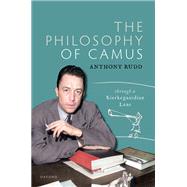
- ISBN: 9780198924838 | 0198924836
- Cover: Hardcover
- Copyright: 3/12/2025
Although Albert Camus is recognised as an important novelist and political commentator, he is often still underrated as a philosopher. Camus' Philosophy, focussing on Camus' explicitly philosophical writings, provides a detailed examination of his intellectual development, and argues that his work constitutes a coherent, carefully argued meditation on central philosophical themes. A systematic comparison of Camus with Soren Kierkegaard provides an interpretive lens through which Camus' central philosophical concerns are brought into focus.
Camus' three thematic "cycles" - dealing with Absurdity, Revolt and Love/Nemesis - are compared and contrasted with Kierkegaard's three "stages of life" - the aesthetic, ethical and religious. Anthony Rudd argues that the Absurd in Camus refers primarily to an experience of the world as lacking Meaning, in a broadly religious sense, which Camus sees as entailing a radical amoralism. Rudd compares this outlook to Kierkegaard's "aestheticism", before considering the reasons for Camus' eventual rejection of Absurdist amoralism for the ethical philosophy which Camus develops in The Rebel. Camus' Philosophy raises questions, in a Kierkegaardian spirit, about whether Camus' ethics can be viable without a fuller metaphysical background than he articulates in The Rebel. Rudd concludes by considering the continuing tension between Camus' affirmation of a Meaningful order in nature and his sensitivity to suffering and evil, looking at his account of tragedy and the apparent pessimism of his last published novel, The Fall.
Camus' three thematic "cycles" - dealing with Absurdity, Revolt and Love/Nemesis - are compared and contrasted with Kierkegaard's three "stages of life" - the aesthetic, ethical and religious. Anthony Rudd argues that the Absurd in Camus refers primarily to an experience of the world as lacking Meaning, in a broadly religious sense, which Camus sees as entailing a radical amoralism. Rudd compares this outlook to Kierkegaard's "aestheticism", before considering the reasons for Camus' eventual rejection of Absurdist amoralism for the ethical philosophy which Camus develops in The Rebel. Camus' Philosophy raises questions, in a Kierkegaardian spirit, about whether Camus' ethics can be viable without a fuller metaphysical background than he articulates in The Rebel. Rudd concludes by considering the continuing tension between Camus' affirmation of a Meaningful order in nature and his sensitivity to suffering and evil, looking at his account of tragedy and the apparent pessimism of his last published novel, The Fall.

Please wait while the item is added to your bag...



Review