

Placing Nature on the Borders of Religion, Philosophy and Ethics
, by Clingerman,Forrest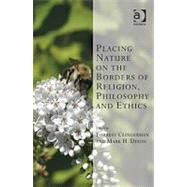
- ISBN: 9781409420446 | 1409420442
- Cover: Hardcover
- Copyright: 8/28/2011
The natural world has been "humanized": even areas thought to be wilderness bear the marks of human impact. But this human impact is not simply physical. At the emergence of the environmental movement, the focus was on human effects on "nature." More recently, however, the complexity of the term "nature" has led to fruitful debates and the recognition of how human individuals and cultures interpret their environments.This book furthers the dialogue on religion, ethics, and the environment by exploring three interrelated concepts: to recreate, to replace, and to restore. Through interdisciplinary dialogue the authors illuminate certain unique dimensions at the crossroads between finding value, creating value, and reflecting on one's place in the world. Each of these terms has diverse religious, ethical, and scientific connotations. Each converges on the ways in which humans both think about and act upon their surroundings. And each radically questions the damaging conceptual divisions between nature and culture, human and environment, and scientific explanation and religious/ethical understanding. This book self-consciously reflects on the intersections of environmental philosophy, environmental theology, and religion and ecology, stressing the importance of how place interprets us and how we interpret place. In addition to its contribution to environmental philosophy, this work is a unique volume in its serious engagement with theology and religious studies on the issues of ecological restoration and the meaning of place.

Please wait while the item is added to your bag...



Review