

Play It Again, Sam Repetition in the Arts
, by Keyser, Samuel Jay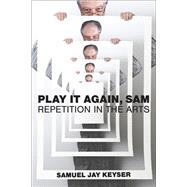
- ISBN: 9780262552325 | 0262552329
- Cover: Paperback
- Copyright: 5/27/2025
Why we enjoy works of art, and how repetition plays a central part in the pleasure we receive.
Leonard Bernstein, in his famous Norton Lectures (1976) extolled repetition, saying that it gave poetry its musical qualities and that music theorists’ refusal to take it seriously did so at their peril.
Play It Again, Sam takes Bernstein seriously. In this book, Samuel Jay Keyser explores in detail the way repetition works in poetry, music, and painting. He argues, for example, that rhyme in metrical verse is identical to the way songwriters like Duke Ellington and Billy Strayhorn (Satin Doll) and Richard Rodgers and Lorenz Hart (My Funny Valentine) constructed their iconic melodies. Furthermore, the form of these tunes can be found in such classical compositions as Mozart’s Rondo Alla Turca and his German Dances as well as in galant music in general.
The author also looks at repetition in paintings like Caillebotte’s Rainy Day in Paris, Warhol’s Campbell Soup Cans, and Pollock’s drip paintings. Finally, the photography of Lee Friedlander, Roni Horn, and Osmond Giglia—Giglia’s Girls in the Windows is one of the highest grossing photographs in history—are all shown to be built on repetition in the form of visual rhyme.
The book ends with a cognitive conjecture on why repetition has been so prominent in the arts from the Homeric epics through Duke Ellington and beyond. Artists have exploited repetition throughout the ages. The reason why it is straightforward: the brain finds the detection of repetition innately pleasurable. Play It Again, Sam offers experimental evidence to support this claim.
Leonard Bernstein, in his famous Norton Lectures (1976) extolled repetition, saying that it gave poetry its musical qualities and that music theorists’ refusal to take it seriously did so at their peril.
Play It Again, Sam takes Bernstein seriously. In this book, Samuel Jay Keyser explores in detail the way repetition works in poetry, music, and painting. He argues, for example, that rhyme in metrical verse is identical to the way songwriters like Duke Ellington and Billy Strayhorn (Satin Doll) and Richard Rodgers and Lorenz Hart (My Funny Valentine) constructed their iconic melodies. Furthermore, the form of these tunes can be found in such classical compositions as Mozart’s Rondo Alla Turca and his German Dances as well as in galant music in general.
The author also looks at repetition in paintings like Caillebotte’s Rainy Day in Paris, Warhol’s Campbell Soup Cans, and Pollock’s drip paintings. Finally, the photography of Lee Friedlander, Roni Horn, and Osmond Giglia—Giglia’s Girls in the Windows is one of the highest grossing photographs in history—are all shown to be built on repetition in the form of visual rhyme.
The book ends with a cognitive conjecture on why repetition has been so prominent in the arts from the Homeric epics through Duke Ellington and beyond. Artists have exploited repetition throughout the ages. The reason why it is straightforward: the brain finds the detection of repetition innately pleasurable. Play It Again, Sam offers experimental evidence to support this claim.

Please wait while the item is added to your bag...



Review