

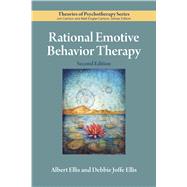
- ISBN: 9781433830327 | 1433830329
- Cover: Paperback
- Copyright: 3/26/2019
This essential primer, amply illustrated with case examples featuring diverse clients, is perfect for graduate students studying theories of therapy and counseling, as well as for seasoned practitioners interested in understanding how rational emotive behavior therapy (REBT) has evolved and how it might be used in their practice.
Created in the 1950s by the legendary Albert Ellis, rational emotive behavior therapy (REBT) teaches clients to challenge their irrational thinking. REBT is based on the simple idea that it is not external circumstances that make a person happy or unhappy, but rather internal thoughts about events or oneself. Thinking, feeling, and behavior are seen as linked and influencing one another. Because changing one's thinking is usually the simplest tactic in a given situation, it tends to be the focus of therapy, alongside the humanistic core REBT philosophies of unconditional self-acceptance, unconditional other-acceptance, and unconditional life-acceptance. Because changing one's thinking is usually the simplest tactic in a given situation, it tends to be the focus of therapy, alongside the humanistic core REBT philosophies of unconditional self-acceptance, unconditional other-acceptance, and unconditional life-acceptance.
This second edition includes updated clinical research, as well as a thorough examination of the important distinctions between REBT and cognitive-behavior approaches.
Created in the 1950s by the legendary Albert Ellis, rational emotive behavior therapy (REBT) teaches clients to challenge their irrational thinking. REBT is based on the simple idea that it is not external circumstances that make a person happy or unhappy, but rather internal thoughts about events or oneself. Thinking, feeling, and behavior are seen as linked and influencing one another. Because changing one's thinking is usually the simplest tactic in a given situation, it tends to be the focus of therapy, alongside the humanistic core REBT philosophies of unconditional self-acceptance, unconditional other-acceptance, and unconditional life-acceptance. Because changing one's thinking is usually the simplest tactic in a given situation, it tends to be the focus of therapy, alongside the humanistic core REBT philosophies of unconditional self-acceptance, unconditional other-acceptance, and unconditional life-acceptance.
This second edition includes updated clinical research, as well as a thorough examination of the important distinctions between REBT and cognitive-behavior approaches.

Please wait while the item is added to your bag...



Review