

Reading Fictions, 1660-1740: Deception in English Literary and Political Culture
, by Loveman,Kate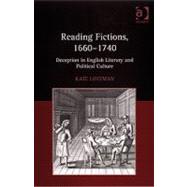
- ISBN: 9780754662372 | 0754662373
- Cover: Hardcover
- Copyright: 6/28/2008
In this elegant, informed, and daring study, Kate Loveman presents an argument that lies athwart the critical preoccupation with the genealogy of the novel. Loveman shows that what we call the novel emerged from within a rich culture of tale-telling in which fictions of all kinds were endemic to coffee house circles, to a world in which detecting shams endowed social prestige and which therefore encouraged skeptical reading within an essentially ludic culture, whose habits persisted even after the emergence of sentimental modes of apprehension. Richard Kroll, University of California, Irvine, and author of Restoration Drama and 'The Circle of Commerce': Tragicomedy, Politics, and Trade in the Seventeenth Century (2007). English society in the late seventeenth and early eighteenth centuries was fascinated by deception, and concerns about deceptive narratives had a profound effect on reading practices. Kate Loveman's interdisciplinary study explores the ways in which reading habits, first developed to deal with suspect political and religious texts, were applied to a range of genres, and, as authors responded to readers' critiques, shaped genres. Examining responses to authors such as Defoe, Swift, Richardson and Fielding, Loveman investigates reading as a sociable activity. She uncovers a lost critical discourse, centred on strategies of 'shamming', which involved readers in public displays of reason, wit and ironic pretence as they discussed the credibility of oral and written narratives. Widely understood by early modern readers and authors, the codes of this rhetoric have now been forgotten, to the detriment of our perception of the period's literature and politics. Loveman's lively book offers a striking new approach to Restoration and eighteenth-century literary culture and, in particular, to understanding the development of the novel. Contents: Introduction; Sceptical reading in the 17th and early18th centuries; The Strange Finding Out of Moses his Tombe: strategies and motives for hoaxing; 'Florishing lyes': coffee-house wit in the Restoration; More Shams Still: reading in the Popish Plot and Exclusion crisis; News, novels and imposture, 16881702; Defoe and his 'ill-disposed' readers; Swift's bites: 18th-century raillery in theory and practice; Bubbling sentiments: Richardson's Pamela and Fielding's Shamela; Conclusion; Select bibliography; Index. About the Author: Kate Loveman is lecturer in English at the University of Leicester, UK.

Please wait while the item is added to your bag...



Review