

The Rise of Digital Repression How Technology is Reshaping Power, Politics, and Resistance
, by Feldstein, Steven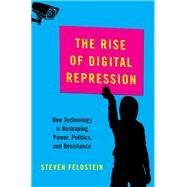
- ISBN: 9780190057497 | 0190057491
- Cover: Hardcover
- Copyright: 4/27/2021
The world is undergoing a profound set of digital disruptions that are changing the nature of how governments counter dissent and assert control over their countries. While increasing numbers of people rely primarily or exclusively on online platforms, authoritarian regimes have concurrently developed a formidable array of technological capabilities to constrain and repress their citizens.
In The Rise of Digital Repression, Steven Feldstein documents how the emergence of advanced digital tools bring new dimensions to political repression. Presenting new field research from Thailand, the Philippines, and Ethiopia, he investigates the goals, motivations, and drivers of these digital tactics. Feldstein further highlights how governments pursue digital strategies based on a range of factors: ongoing levels of repression, political leadership, state capacity, and technological development. The international community, he argues, is already seeing glimpses of what the frontiers of repression look like. For instance, Chinese authorities have brought together mass surveillance, censorship, DNA collection, and artificial intelligence to enforce their directives in Xinjiang. As many of these trends go global, Feldstein shows how this has major implications for democracies and civil society activists around the world.
A compelling synthesis of how anti-democratic leaders harness powerful technology to advance their political objectives, The Rise of Digital Repression concludes by laying out innovative ideas and strategies for civil society and opposition movements to respond to the digital autocratic wave.
In The Rise of Digital Repression, Steven Feldstein documents how the emergence of advanced digital tools bring new dimensions to political repression. Presenting new field research from Thailand, the Philippines, and Ethiopia, he investigates the goals, motivations, and drivers of these digital tactics. Feldstein further highlights how governments pursue digital strategies based on a range of factors: ongoing levels of repression, political leadership, state capacity, and technological development. The international community, he argues, is already seeing glimpses of what the frontiers of repression look like. For instance, Chinese authorities have brought together mass surveillance, censorship, DNA collection, and artificial intelligence to enforce their directives in Xinjiang. As many of these trends go global, Feldstein shows how this has major implications for democracies and civil society activists around the world.
A compelling synthesis of how anti-democratic leaders harness powerful technology to advance their political objectives, The Rise of Digital Repression concludes by laying out innovative ideas and strategies for civil society and opposition movements to respond to the digital autocratic wave.

Please wait while the item is added to your bag...



Review