

School as a Secular Space in Contemporary India Everyday Practice in Azad Bharat Vidyalaya
, by Mittal, Devika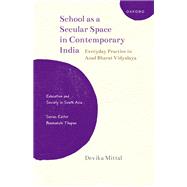
- ISBN: 9780198993605 | 0198993609
- Cover: Hardcover
- Copyright: 5/7/2026
The Constitution of India upholds secularism as a key ideal. Although the 42nd amendment to the Preamble to the Constitution officially declared India to be a 'sovereign, socialist, secular, democratic republic', the Constitution itself does not prescribe a specific definition of secularism. Given their close relationship with the State, Indian schools are expected to uphold Constitutional ideals, including secularism. School as a Secular Space in Contemporary India journeys into the life of a government-aided, non-religious school in Delhi to explore how the abstract concept of secularism is interpreted and enacted therein. Unpacking the school culture, this book offers insights into the nature of secularism in India. It reveals layers of conformity and contestation of the school's goals in general and its conception and practice of secularism in particular. The notion of secularism is interwoven with nationalism, religion, and community-based assertions, and grounded in the concepts of equality and social justice. Exploring the plural, and even competing, narratives of secularism emerging from these intersections, the author argues that these are not confined to the school alone but mirror the paradox of secularism in the Indian society.

Please wait while the item is added to your bag...



Review