

Science Competes Informing Policy in a Time of Distrust, Fracture, and Chaos
, by Bozeman, Barry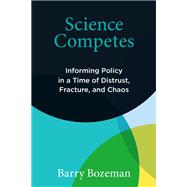
- ISBN: 9780262552431 | 0262552434
- Cover: Paperback
- Copyright: 4/1/2025
When science competes with myriad influences in public policymaking, how can we ensure that it does so effectively?
Policymakers, like most people today, have a world of information within easy reach, much of it wrong. How, amidst the chaos and misdirection of our day’s information ecosystem, can science compete for the attention and trust of those who make public policy—especially at a time when issues like proliferating infectious diseases and climate change put a premium on accurate and relevant scientific information? What’s needed, Barry Bozeman suggests in Science Competes, is a clearer understanding of how scientific information is conveyed, how it is understood and used, and where it fits in the wide array of information that might be of use to those who make and administer policy, laws, and regulations, as well as citizens who actively participate in public life.
Acknowledging the importance of different sorts of information—historical, experiential, political, e.g.—to decision making, Bozeman focuses on enhancing, not maximizing, the effective use of science in public policy. This entails recognizing that valid and useful scientific information is not necessarily formal scientific knowledge, but often takes the form of science by-products such as raw or structured data, graphics, and conceptual models. Explaining how such information can be better distinguished from half-truths and pernicious falsehoods, Science Competes also raises the possibility that effective competition might require improvements in science institutions, norms, and ideas about acceptable behavior.
Policymakers, like most people today, have a world of information within easy reach, much of it wrong. How, amidst the chaos and misdirection of our day’s information ecosystem, can science compete for the attention and trust of those who make public policy—especially at a time when issues like proliferating infectious diseases and climate change put a premium on accurate and relevant scientific information? What’s needed, Barry Bozeman suggests in Science Competes, is a clearer understanding of how scientific information is conveyed, how it is understood and used, and where it fits in the wide array of information that might be of use to those who make and administer policy, laws, and regulations, as well as citizens who actively participate in public life.
Acknowledging the importance of different sorts of information—historical, experiential, political, e.g.—to decision making, Bozeman focuses on enhancing, not maximizing, the effective use of science in public policy. This entails recognizing that valid and useful scientific information is not necessarily formal scientific knowledge, but often takes the form of science by-products such as raw or structured data, graphics, and conceptual models. Explaining how such information can be better distinguished from half-truths and pernicious falsehoods, Science Competes also raises the possibility that effective competition might require improvements in science institutions, norms, and ideas about acceptable behavior.

Please wait while the item is added to your bag...



Review