

Sometimes There Is a Void Memoirs of an Outsider
, by Mda, Zakes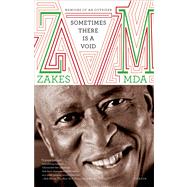
- ISBN: 9781250023988 | 125002398X
- Cover: Paperback
- Copyright: 1/8/2013
"Moving, funny... Here is a man looking back on his life and country with joy and sorrow." John Freeman, The Boston Globe The most acclaimed South African writer of his generation, Zakes Mda eight novels venture far beyond the conventional narratives of a people's struggle against apartheid. In this memoir, he tells of a life that intersects with the politics of his countrya story that is, at its heart, the classic adventure of an artist, lover, and bon vivant. Living in exile with his father in Basutoland (now Lesotho) during the first pangs of his country's independence, a series of brutal and poignant initiations ushered him toward the life of a writerand that of a perpetual outsider. Through the indignity of Boer racism, the turmoil of the Soweto uprisings, not to mention three marriages and his eventual immigration to America, Mda struggled to remain his own man. With Sometimes There Is a Void, he shows that independence opened the way for the stories of individual South Africans in all their variety.
Zakes Mda is a professor of creative writing at Ohio University. He has been a visiting professor at both Yale and the University of Vermont. Among his novels, The Heart of Redness (FSG, 2002) won the Richard Wright Zora Neale Hurston Legacy Award. He lives in Johannesburg, South Africa, and Athens, Ohio.
CHAPTER ONE THE SMELL OF LIFE is back on the pink mountain. Human life, that is, for other forms have always thrived here even after we had left. Before our return shrubs and bushes flourished, but their fused aromas highlighted an absence. The air was too crisp. Too clean and fresh. In spring aloes bloomed - hence the pinkness - and wild bees busied themselves with the task of collecting pollen for some hive that would invariably be located in a cleft of a dangerous-looking sandstone cliff. Now we have tamed the bees, and are keeping them in supers that dot the landscape. Bees have brought us back to the mountain.Decades ago my grandfather's estate sprawled out on this mountainside. He, Charles Gxumekelana Zenzile Mda, was the headman of Qoboshane Village in the Lower Telle area, named for the Telle River that separated Lesotho from the Herschel District of the Cape Province in the Union of South Africa. A headman was the chief of a small village, and my grandfather was given that position by his brother-in-law, Edwin Mei, the original headman who pursued a better career as an interpreter at the magistrate's court in Sterkspruit. Edwin also gave Charles a huge chunk of Dyarhom Mountain where he planted vast orchards and built houses for his wife, Mildred Millicent Mda, who never forgot to remind everyone of her true royal breeding by repeating at the slightest provocation: Undijonge kakuhle, ndiyintombi kaMei mna. Don't mess with me, I am Mei's daughter.Soon other families built their homesteads on the mountain, and my grandfather named the settlement Goodwell.The elite of Qoboshane lived in Goodwell. Across the gravel road, just below my grandfather's estate, lived Mr Nyangintsimbi who, as the principal of Qoboshane Bantu Community School, taught me and my father before me. As a spindly boy of twelve I used to play with his son Christopher, though I was in awe of him because his father was the school principal. My own grandmother used to teach at that school. Her mantra, as she twisted your ear for not performing your tasks properly, was: 'One thing at a time, things done by halves never done right'. She said these words in English. Grandma always spoke in English when she was mad at us, whereas on all other occasions she spoke in her native isiXhosa. We came to regard English as a language of anger.There were other homesteads on that mountain, but because the houses and kraals blended with the rocky terrain in perfect camouflage you knew of their presence only by the smoke that spiralled from each of them every morning and evening.That was in 1960.Today I am walking with Gugu on the ruins. I call them ruins, though nothing is left of the buildings. The stones long since became part of the landscape. Yet I remember where each house used to be. I show Gugu where the main house, ixande, stood. It was built of stone and roofed with corrugated iron. It was pure joy to sleep in that house when it rained because the sound of the raindrops created ear-shattering music on the roof. But when it thundered it got really scary; the rafters shook and we imagined all sorts of fire-breathing ogres dancing in the rain, creating all the mayhem.As we walk the length of what used to be our yard surrounded by gigantic aloes, I point out to her where each house used to be: the grass-thatched rondavels, one used as a kitchen, another one as a pantry, the big four-walled thatched house with decorative patterns on the red mud walls. You had to climb many stone steps before you got to the mud stoep and the door. This house also served as our living room, except when there were important visitors: they would be welcomed on the sofas in the ixande.We all slept in the thatched four-walled house. There weren't enough beds to go round; some of us slept on mats on the floor. In seasons of scarcity sleeping on the floor became a source of hilarity, like when we woke up one morning and discovered that Cousin Ethel's toes had been nibbled by rats and were caked in red. She had slept through it all.The kitchen rondavel was the centre of our social life in the evenings. Not only did grandmother cook our food in a three-legged cast-iron pot in the hearth that was in the middle of the hut as fifteen or so grandchildren huddled together around the fire in a cold winter, we also told folk tales in this room. I remember that when my siblings and I were newly arrived from Johannesburg sitting here was an ordeal; we would cry streams from the pungent smoke that filled the hut. But after a few months our eyes, like those of the rest of the cousins, were inured to the smoke.We each took turns telling stories that had been passed on to us by older relatives, who had in turn learnt them from those who came before them, from one generation to the next, beginning when time began.We noted whenever Cousin Nobantu came to visit from Johannesburg that her stories would not be quite the same as ours. By that time I had already spent a year or so in this village and thought of myself as one of the villagers as Johannesburg became a receding memory, whereas Cousin Nobantu only came to visit during school holidays. Although her stories would have the familiar characters that we had grown to love so much and the plots were no different from the plots we knew so well, her characters acquired Johannesburg slickness. Also, they spoke in isiZulu and in a lot of township slang, whereas our characters spoke in isiXhosa as spoken by the village people. Her characters were therefore more endearing than ours. isiZulu gave them the sophistication that villagers envied in Johannesburgers.And then there was Cousin Nondyebo whose manner of narration transformed even those characters we knew as kind and gentle into bullies, quite reminiscent of her own bullying tendencies. She was older than the rest of us, and had even been to Lady Grey, a town that lay beyond our district headquarters of Sterkspruit. She was therefore the fountain of all wisdom.But the stories that left us in stitches were Cousin Ethel's. Whereas we all told stories as they were passed down to us, Cousin Ethel invented new events and characters in the tried and tested folk tales. She even incorporated the rats that ate her toes in a story about Mamlambo, the water goddess who lives in the Mzintlava River but travels in lightning to visit other rivers, including the river that runs in a narrow valley between our own Dyarhom Mountain and the eSiqikini Mountain. The true Mamlambo is a beautiful goddess with the torso of a horse, the neck of a snake and the lower body of a fish. But Cousin Ethel added other features to this wonderful water creature, such as hair that was flaming red and spellbinding eyes that hypnotised toe-chomping culprits until she swallowed them. Oh, yes, Cousin Ethel's rats got their comeuppance from Mamlambo!Stories continued even as we ate umgqusho - samp cooked with beans - and umfino - wild spinach - from a single basin. As our hands raced to the food and as we stuffed it in our mouths and swallowed without chewing properly so as to fill our stomachs before the basin was empty, storytellers continued unabated. Occasionally grandmother snapped at them, 'Don't talk with your mouth full' or 'If you don't chew your food you will be constipated and I'll have to unblock you with castor oil or an enema'.Outside the kitchen rondavel was the smooth granite stone that was used for grinding maize, wheat and sorghum into flour, and another granite rock with a hole and a pestle for stamping maize into samp. On the clearing below the ixande was the space where the bus that travelled between Qoboshane and Sterkspruit, Dumakude Bus Service, was parked every night. My grandparents rented out the parking space, and a rondavel up the mountain where the driver slept, to the coloured family who owned the bus. The fact that Dumakude slept at our home was a source of pride to the hordes of grandchildren who lived at the estate.And then there were the orchards; my grandfather's own source of pride. People wondered how he had turned the rocky mountain into a Garden of Eden. There were rows and rows of peach, apricot, quince, pear, apple, orange and pomegranate trees. There were also vines that bore both green and purple grapes, and cacti that bore red and green prickly pears. Figs had great prominence in the orchard, and my grandmother said it was in honour of our grandfather's father whose name was Feyiya, which means fig. In summer yellow cling peaches became our bane because we had to eat them as relish for hard porridge during hard times. Sometimes my grandfather's relatives from Lesotho would wade across the Telle River and bring us wild honey, which also helped in our battle with hard porridge.It is hard to believe that I lived here for only two years - from 1960 to 1962 - when at the age of twelve I was banished from Johannesburg by my own parents for engaging in gang activities. My father had moved to Engcobo in the Transkei to serve articles under George Matanzima in order to be admitted as an attorney, while my mother remained in Johannesburg working as a registered nurse and midwife at the Dobsonville Clinic.While she was at work at the clinic, which was just across the street from our four-roomed home, or cycling in the township delivering babies, I was playing truant from school and hanging out on shop verandas where I played the pennywhistle with other delinquent youths. Or I would be fighting in street gangs where I had become famous among my peers as a ducking champion, though my throwing of the stones that we used as weapons of war was reputed to be weak. On the occasions when I did go to school I spent most of the time in class drawing pictures. My talent was recognised when the teacher asked us to illustrate the poetry we were studying with appropriate pictures and I drew the Zulu warrior uPhoshozwayo as an illustration for a poem in his praise. With crayons, I brought his traditional dress of leopard skins and a shield and a spear to life. Then I signed the picture at the bottom right: 'by Zakes the Artist'.That was the beginning of the name Zakes. I was given the name by a friend, Percy Bafana Mahlukwana, an artist in his own right, who later died in one of those gang wars. At the time there was a famous jazz saxophonist by the name of Zakes Nkosi in Alexandra Township. With my initials ZK, it seemed the logical thing to name me after this great man.Sometimes I played truant from gang warfare and spent my time praying. I imagined that one day I would be a Catholic priest and go to heaven. I built an altar behind the house and on Saturdays and Sundays I lit candles and conducted a holy mass for myself. Sometimes the girl next door joined me and marvelled at my Latin chants: Gloria Patri et Filio et Spiritu Sancto ... Dominus vobiscum ... et cum spiritu tuo ... oremus.Because I thought she was my girlfriend, one day I asked her for isinjonjo - township slang for sex. She burst out in anger, threatening never to visit my altar again if I asked her to do 'silly things'. That was a relief! I wouldn't have known what to do if she had said yes. I immediately apologised and vowed on my life never to ask for isinjonjo ever again.The last straw for my mother was when I was frogmarched home by a man who claimed I had robbed his daughter. That afternoon I had been loitering on the shop veranda as usual when a man and his weeping daughter, who was slightly younger than me, arrived. The daughter pointed at me as the boy who had robbed her of the money with which she had been sent to the store to buy a loaf of bread. I swear I had nothing to do with it, but when he searched me and found a big knife in my pocket the crime fitted me very well.Not only had I disgraced my mother by engaging in criminal activities, I had also stolen a knife from her special set of braai knives and forks with carved ivory handles. My protestations that I had only carried the knife to impress my friends did not convince her. She had had enough of me, and she wrote to my father to fetch me and take me to his own parents at Qoboshane.Under normal circumstances I loved visiting my grandparents in the village, particularly because I enjoyed travelling by train. It was always exciting to board at Park Station and then change trains in Bloemfontein after spending the whole night being lulled to sleep by the grinding rhythm of the wheels on iron, or to stand in the corridor looking out at the telephone poles passing very fast. If we were lucky we - my mother, my twin brothers Sonwabo and Monwabisi, my sister Thami, and my baby brother Zwelakhe - would have our own compartment with four berths, like bunk-beds. The greatest joy came from eating umphako - provisions for the road - of chicken and steamed bread carried in a cane and wicker basket. Sometimes we shared the compartment with another family, in which case we would share our respective umphako. Invariably they would also be carrying chicken and steamed bread in a similar basket. From Bloemfontein the train took us to Zastron, where we would catch a bus to Sterkspruit, and then take our trusty Dumakude Bus Service right to the doorstep of my grandparents' ixande.But on this occasion of banishment the two-day train journey was a very unhappy one. I was leaving my friends in Johannesburg, and I wondered how I would cope in a village. My father didn't make things any better when he snapped at me in a café in Sterkspruit. He was at the counter buying fish and chips for our lunch and I was standing next to him. A mad woman in dirty tattered clothes approached me, smiling. She really scared me, so I moved to the other side of my father. But he thought I was afraid of a white boy, about my age, who had also approached the counter at the same time. He reprimanded me right there in public for giving way to the boy just because he was white and lectured me on how I was just as good as the boy and had no business to be afraid of white people. I just stood there feeling small; I dared not defend myself by saying that I was escaping the mad black woman and not the white boy.When I came to live here grandfather had already lost some of his marbles, after an assassination attempt by a man called Gazi who stabbed him in the head with a knife. Apparently Gazi had been unhappy about one thing or another in grandfather's administration. After the stabbing Charles was no longer the grandfather I remembered on earlier visits, years before. The grandfather who sat in the shade of a gigantic boulder across the gravel road surrounded by his councillors, settling community disputes; who rode his horse Gobongwana, while singing its praises; who sat at his iron sewing machine making leather shoes while still singing praises to Gobongwana (we were proud that he was not just a cobbler who fixed soles like the old man on the veranda of Cretchley's store; he created shoes right from scratch); who stood in front of ixande in his brown riding breeches and gave sweets to a queue of grandchildren whenever he came from meetings in Sterkspruit; who never forgot to give a brief caress to his twenty-year-old dog Ngqawa, as it slept at the door; and who regaled us with stories of our revered ancestor Mhlontlo.According to him, our clan, the amaMpondomise people, originally came from Qumbu in the eastern part of the Cape Province - the region that was named Transkei by subsequent colonial governments. Then one day Mhlontlo, who was a paramount chief in that area, killed the British resident magistrate. It happened in 1880, the very year my grandfather was born. First, Mhlontlo invited the magistrate to a ceremony at Sulenkama, the seat of the amaMpondomise kingdom. The magistrate, a violent and arrogant man called Hamilton Hope, set off with much pomp, thinking that he was going to be the centre of the ceremony, only to discover too late that the ceremony was about his own ritual murder. My ancestor, who was also a reputable medicine man, conducted the ritual in which parts of Hope's body were to be used as medicine to strengthen his armies. The whole ceremony involved a theatrical performance: Mhlontlo and his people rode back to Qumbu, thirty kilometres away, took over the magistracy and improvised a play where Mhlontlo took the role of Hamilton Hope. Turning over the pages of the big book on the magistrate's bench and adopting a nasal tone in his Anglicised isiXhosa, he mimicked Hope sentencing people. Well, that theatre didn't last for long. The British forces came to arrest Mhlontlo, but he and his followers escaped to Lesotho, where they were given refuge by Chief Moorosi of the Baphuthi clan.My grandfather was a baby on his mother's back during that long journey of nearly six hundred kilometres. His parents and the hundreds of Mhlontlo's followers felt very safe because he had strong medicine that protected everyone. Both the British and the Boers feared him; he could make their guns spew water instead of bullets and their cannons explode in their faces.After some time a white trader lured Mhlontlo with new blankets from his Lesotho refuge to the Telle River that bordered South Africa. He was captured by the British troops who took him back to Qumbu for trial. Grandfather never told us the details of how Mhlontlo won the case, but he did. It must have been his strong medicine at work.Many of Mhlontlo's followers decided against returning to Qumbu. That is why there are many Mdas in Lesotho today. My great-grandfather - Charles' father, that is - the Feyiya Mda who I mentioned in relation to the orchards, decided to cross the Lesotho border back to South Africa and to settle at eKra Village in the Lower Telle area.By the time I went to live with my grandfather he could no longer remember the story of Mhlontlo. He had become a cantankerous old man who would tap a tyke's head with a walking stick for no apparent reason. We stayed out of his way.He could no longer work in his fields either. Grandmother did all the farming with the help of the other villagers in work-parties known as ilima. But we were spoilt. We were never allowed to work in the fields like other village kids or like some of her older grandchildren. My siblings - who were already staying with my grandparents even before my banishment - and I were greatly distressed that we could not go to the fields. Ilima was so much fun - with food, songs and dances. Once we went with people who were taking food to the workers, but grandmother shooed us away.'Go away,' she said. 'You, children of Solomzi, will be scorched by the sun.'We took this as a punishment for being my father's children. After all, we had seen how partial she was towards her other grandchildren - especially those who were the children of her daughters rather than of her sons. We had seen how she used to hide chunks of pork in her apron pockets for Cousin Bernard, while we had to eat porridge with peaches. We knew that Bernard's mother, who had left the village for Johannesburg many years ago and never came back, did not send any money for his upkeep. Only my father sent money which my grandmother used to support hordes of grandchildren whose parents didn't bother.That was why I told my father when he paid us a visit once that we were suffering and my cousins were getting preferential treatment at our expense. That afternoon he went to drink brandy with his friends and came back late in the evening. He was drunk and knocked at grandmother's door, yelling that she did not treat his children well.The next day he was sober and remorseful. He apologised to grandmother for yelling at her, and then upbraided me for telling lies about his dear mother who was sacrificing so much to look after us.But that was not the end of that story. When my father's younger brother, Uncle Owen, came visiting from Johannesburg many months later he punched me in the face and kicked me in the stomach even though I was already writhing on the ground, for lying about his mother to my father. And indeed my father's oldest sister, Aunt Nontsokolo, who owned a general dealer's store at 'Musong a few miles away, gave me a few choice words about my lies. Aunt Nontsokolo could afford to be self-righteous because she was the only one of my father's five siblings who did not at any stage dump her children with my grandmother but was bringing them up herself.How could we not take our prohibition from ilima as punishment when we were forbidden even from looking after cattle? Granted, our grandfather no longer owned any cattle since the assassination attempt. Only disused kraals remained as evidence of his cattle-owning days. But we so much wanted to join herdboys from neighbouring homesteads in the fun and games that we knew took place out there in the pastures. As it was, our schoolmates who herded cattle after school and during weekends took us for sissies. Worst of all, we were not privy to their insider jokes and dirty stories whose settings were the great meadows and gorges where the cattle grazed, and the rivers where the boys moulded cattle from clay as the animals drank.I could only console myself by roaming within the confines of the estate and spelunking the caves that were only a short distance from the rondavels. I was fascinated by the Bushman paintings that were still vivid and I tried to reproduce them in my notebook. This was an illegal act according to my teachers, because notebooks were meant for nothing but notes. I was constantly punished for it - a few whacks on my knuckles with a ruler.
THE REASON FOR RETURNING to this pink mountain is not to relive the past - though one cannot escape a little bit of nostalgia - but to visit the beekeeping project that I started with the village women a few years back. Gugu and I come here occasionally to see the Bee People, as we call them, and to admire the progress they have been making over the years. After taking us on a tour of the hives, especially the two supers that are in an enclosure of aloes between the graves of my grandfather and one of my aunts, we bid the Bee People goodbye and get into my car.The mountain road is rough and narrow. A Mercedes Benz sedan was not built to negotiate boulders on what passes for a road, and often the rocks that stick out cannot but scrape against the bottom of the car. Fortunately this is not a busy road; otherwise I would be at a loss what to do if another car approached in the opposite direction. I dare not move to the side for fear of rolling down the slope. There are no railings, and already I can see skeletons of cars that must have rolled down over the years. No one could have survived the impact on the rocks hundreds of yards below.There is a sigh of relief when we reach the village at the foot of the mountain.It is more like a township than a village really, with modern bungalows, schools and shops. The biggest of the shops belongs to my Uncle Phakamile, or Press, as we call him. It combines a general dealer's store, a restaurant and a tavern. The villagers call it eRestu. We use it to hold our meetings with the Bee People whenever we visit from Johannesburg or, in my case, from the United States where I now teach creative writing at Ohio University. Sometimes we just hang out to soak in the wonderful atmosphere created by drunken old ladies and various village characters, and by the smell of fish and chips and fat cakes deep frying in oil.Some of the inhabitants once owned homesteads on the mountain we have now turned into an apiary - at Goodwell. But the Boers - and when we talk of the Boers we actually mean the apartheid government of the time - forced them down from the mountain and resettled them near the Telle River. It would be easier to govern them there and to ensure that they did not hide guerrilla fighters, or terrorists if you like, in their midst.We branch off to eRestu to say goodbye to Press and his wife as we'll be driving back to Johannesburg. It is a six-hour drive and the earlier we leave the better. I hate driving at night.'How are the bees doing, son?' Press asks. He is only six years older than me at most, but basks in the glory of being the son of my grandfather's brother. According to tradition, he is a peer of my father's and therefore I am his son.'The bees are doing fine, Press,' I say. 'Although last winter's snow was not kind at all. The harvest will be small.''I do not know why you waste your time doing this honey business from which you gain nothing. You should have invested the money in my shop here. All I need is ten thousand rands to fill these shelves with goods. You would get your money back with a lot of profit.'He has said this before. We Mdas have worked hard to get where we are. Why should we care about these good-for-nothing villagers?'It is my time that I put into this honey business and of course my expenses to travel here from Johannesburg occasionally,' I explain to him. 'But many other people have contributed to its success.''Johannesburg? But I hear you now live in America,' he says. And he asks one of his daughters behind the counter to give us cold drinks of our choice and some biscuits.'Yes, I work there now. Just like the migrant workers who go to the mines in Johannesburg. After every few months I return to see my mother. I may as well use that time to see how the Bee People are doing as well.'Press is a hard-working business man who toiled in the mines in his youth because he did not have any education. To this day he is illiterate. He saved his money, and after a few years he came back to his home village to establish this business. Since he lifted himself up from poverty until he became the richest man in the village, he cannot understand why anyone should waste his time trying to pull others up.'You see, Press, that beekeeping project will enrich you too,' I say, half-jokingly. 'When the villagers have money they will spend it in your store.''I hear you, child of my brother, but still ...''But still we must go now, Press. We have a long way to drive.'The stretch of dirt road from Qoboshane to Sterkspruit never fails to flood my mind with memories. That is why I turn to look at Gugu and say, 'You know, I am a creation of women. Not only because for nine months I was part of a woman's body, but for the simple reason that every woman with whom I have intimately interacted has contributed something in the moulding - for better or for worse - of who I have become.'We are driving past St Teresa Roman Catholic Mission about sixteen kilometres from Qoboshane. A minibus taxi in front of us leaves a cloud of dust in its wake, and it remains hanging in the air for quite some time. The buildings look distorted through the combination of dust particles and the heatwaves, creating a very eerie image. I can see twisted nuns in black habits, ghosts of the past, walking silently in the grounds; pacing to and fro; muttering things to themselves; perhaps reading beads on their rosaries.Among these apparitions I can see Sister Eusebia. She is the only one whose name I can remember, for she was the principal when my father taught at this secondary school from January 1948 to June 1955. She is the one who is still smiling in black and white photographs in my father's album - my only material inheritance from him. That and a number of LPs of Frank Sinatra, Marian Anderson, the Beatles, King Kong (the South African musical), Ella Fitzgerald, Satchmo, Handel's Messiah, Dark City Sisters, Jim Reeves, the Mormon Tabernacle Choir, the Singing Bells and thirty or so others that he collected when he was a member of a record club from 1963 to 1966. The photo album is the only thing that I still have. The music albums went with my furniture and books when an ex-wife sold my stuff after an acrimonious divorce.Sister Eusebia, a group of other nuns and the secondary school students in gym-dresses and white shirts still smile at me in black and white whenever I don a surgical mask to page through the photo album. The mask is essential because the dust mites that have accumulated between the pages over a period of more than five decades make me cough and sneeze and cry and itch all over whenever I visit those venerable pages. The mask, however, does not prevent the pain I still feel when I look at the angelic picture of a smiling Father Sahr - he of the Order of Mary Immaculate. His car killed my dog Rex when he drove through Goodwell once. Rex liked to bark at cars that drove on the dirt road in front of my grandfather's estate. And Manqindi - the name we gave to the German Catholic priest because one of his hands did not have fingers, the result of an incident in some world war - did not even stop his car after killing my Rex in cold blood. I vowed I would never own another dog for Father Sahr to kill. Since then I have never had another dog, though of course I have long stopped blaming the poor priest.What strikes me as I drive past the Catholic mission is that it still looks the same. In fifty-five years nothing has been added; nothing has been taken away. All the stone buildings with red roofs are exactly as I remember them. Even the house where we lived when I was born. My father must have celebrated his new job at St Teresa's Native Secondary School with my conception, for I was born on the sixth of October, 1948, nine months after he joined the staff.I wasn't born in that house, though, but at Mlamli Hospital a few kilometres from the mission station. My father named me Zanemvula, which has the double meaning of 'the rain bringer' and 'the one who has been brought by rain'. I do not think the heavens opened up and wept when I was born. Rather, I was named after a character in Ingqumbo Yeminyanya, the isiXhosa novel by A C Jordan that was published in 1940 and years later translated into English by the author as The Wrath of the Ancestors. It was hailed as one of Africa's finest novels. It captivated readers because of its lyrical prose and its treatment of Western intrusion on the culture of amaXhosa. But what captivated my father most was that the novel was about our clan, the amaMpondomise people.Father Sahr would not baptise me into the Roman Catholic Church without what he called a Christian name, which had to be a saint's name. But my father, an ardent Pan Africanist, insisted that he would not give me a 'white name', so he opted for Kizito, after the youngest of the Ugandan Martyrs. Although Kizito had only been beatified at the time and was not yet a fully fledged saint (he has since been canonised), the priest approved. My third name, Gatyeni, was my father's way of giving a nod to his ancestors by naming me after one of them.My earliest memory resides in that house. I was three years old when mother and father came home with two babies in fluffy white. They were the twins, Sonwabo and Monwabisi, fresh from Mlamli Hospital and smelling of Johnson's Baby Powder. They were not my favourite people because they seemed to grab all my parents' attention. These usurpers spent a lot of time crying or sleeping. When they were sleeping and there was no one else in the room I opened their eyes with my fingers and inspected their eyeballs. Then I poked their faces just for the heck of it. This practice continued on a daily basis until I heard the radio telling on me as soon as my father switched it on to listen to the news one evening. It was the same radio that once interrupted Glenn Miller's 'String of Pearls' with ear-shattering static and then ratted on me that I had stolen sugar and condensed milk. Fortunately, on all the occasions it decided to be a tattle-tale no one else paid attention. Both my parents carried on with whatever they were doing as if they had not heard it. But I decided to stop all my criminal activities because I knew that one day the radio's snitching would ring loud and clear in their ears and I would be in deep trouble.Yes, the grounds of the mission station are exactly as I remember them when I played with my friend Bernard Khosi on our tricycles, and when I followed my father around on a path between the buildings, a newspaper in my pocket. Even though I could not read I always carried a newspaper with me, just like my father. Or a book. Any book from his shelf. It didn't matter that none of its pages was illustrated. The fact that I was walking around with a big book in my hand, just like father did, was satisfaction enough. It could be Abou Ben Adhem and the Angel, Shakespeare's Julius Caesar or a tome by George Eliot or one of the Brontë sisters that my father taught in his English literature classes, or the William Wordsworth and Percy Bysshe Shelley poetry that he made his students recite. During these walks father would himself recite Mark Antony's oration or something from Macbeth. I had no idea what the words meant and he never bothered to explain, but his voice still reverberates in my head: 'Tomorrow and tomorrow and tomorrow, creeps in this petty pace from day to day, to the last syllable of recorded time ...'My father was also an ardent gardener, and the staff quarters at St Teresa did not give him the opportunity to consummate his relationship with the soil. So, he rented a house at the nearby village of KwaGcina and we moved there. He cycled to work every morning, and after school he worked in his garden, particularly on those days when he was not conducting the school choir. When he was too tired to water the flowers and vegetables he sat on a chair on the stoep and drew pencil portraits of the twins and me and anyone else who happened to be around. People always marvelled at how he was able to bring out a person's likeness exactly as the person was.Later, he bought a number of Jersey cows and employed village women to churn butter in big jars that were normally used for bottling peaches. I remember rows of women, some in the red-ochre isikhakha attire and big iqhiya turbans of the abaThembu people, sitting in front of the hatchery and shaking the jars to the rhythm of four-part harmonies. Occasionally a woman would be carried by the spirit, stand up and flaunt a few oscillations of the waist and shoulder, and then sit down to resume churning the butter.In the hatchery there were batteries of incubators. Father encouraged villagers to raise chickens for meat. They bought day-old chicks from his hatchery.When my mother got a job as a nursing sister in another village called Dulcie's Nek my parents employed a nanny to look after us. Nontonje was initially a red girl, which meant she wore the traditional red-ochre clothes, but she was soon socialised into floral dresses that were mostly hand-downs from my mother.I didn't know of my father's activities besides his teaching and farming. Sometimes he was away for extended periods. We heard adults talking about how he had been banned by the Minister of Justice, C R Swart, from attending any gathering in any place within the Union of South Africa. Then we heard that there was a big problem between him and some local villagers, particularly the village chief, Steyn Senoamali, who was supported by Mr Fihla, the primary school teacher. We never got to know the nature of the problem exactly, but it was somehow related to a civil action in which my father was suing Steyn Senoamali for calling him a communist and the Native Commissioner of Herschel, our district, was in full support of the village chief. Perhaps Fihla was going to give evidence on behalf of Senoamali and the Native Commissioner and tell the court that they were not being libellous since my father was indeed a communist as confirmed by his membership of the African National Congress. Anyone who fought against apartheid was regarded as a communist and was likely to be banned under the Suppression of Communism Act, even if he was as anti-communist as my father was. Most likely, Senoamali and Fihla were being used by the Commissioner to spy on my father.There was so much bad blood between my family and Senoamali that he haunted my dreams. He was reputed to be a powerful ixhwele - medicine man - and I feared that he was going to harm my father with his wizardry. Nontonje, who understood these issues better, kept me and the twins abreast of events, particularly on Senoamali's prowess in the field of magic. She painted a vivid picture of a stick that he used to cast spells, which was also capable of transforming into a snake. His name, which is Sesotho for 'the one who drinks blood' or, even more ominous, 'the blood-sucker', added to my anxieties about the safety of my family.One night I was woken up by a loud knock on my bedroom window. And there was Senoamali's stick peeping between the curtains. 'Hello, Kizito,' it said. 'Ndiyeza ngapho - I'm coming over there.' Behind it out there I could see white horses dancing in the dark, flames raging from their hoofs. The next morning I told Nontonje about the visit, and she confirmed that indeed that was clear evidence that you don't mess with an ixhwele of Senoamali's stature. Two decades later I wrote a poem titled 'Dance of the Ghosts' based on the incident. It begins: I dream/ And my dreams/ Are dreams of ghosts/ I see them prancing/ And gamboling/In the moonlight/ Their eyes glow/ With impish pride/ And their feet dance/ To the rhythm/ Of no music.As the days for the court case approached, the dream became recurrent. Until Nelson Mandela came from Johannesburg to rescue me. His presence assured me that Senoamali's stick would be defeated.He was a lawyer from the firm of Messrs Mandela and Tambo and was instructed by my father to handle the case against Senoamali and the Native Commissioner. I liked him because whenever he visited our house he never forgot to mention how handsome I was. He was quite handsome himself, with finely combed hair parted on the right in what we called 'the road'. That was my father's style too - a style that I often asked Nontonje to do on my head. Alas, my mother never allowed my hair to grow long enough to make 'the road' noticeable.Mandela was not just my father's lawyer but he was his friend as well. When Anton Lembede died in 1947 my father, a founding member of the African National Congress Youth League, took over as its president. But the following year he had to leave Johannesburg because of ill-health and went to teach at St Teresa. He continued with his presidency and periodically made the trip to Johannesburg to catch up with ANC Youth League business. Later he set up a working committee comprising Nelson Mandela, Walter Sisulu and Oliver Tambo to manage the activities of the organisation in his absence.Even when we still lived at St Teresa Nelson Mandela would sometimes drive all the way from Johannesburg to consult with my father. One day Mandela came to St Teresa with a briefcase of documents in preparation for some ANC conference where the Youth League was to present its strategy. He was not aware that the Special Branch cops were following him. When he arrived my father was in his Junior Certificate literature class. Sister Eusebia called him outside, and he and Mandela conferred for a few minutes before Mandela handed him the briefcase. Mandela drove away, but as soon as my father got back to his classroom there was another knock. He opened the door thinking that it was Mandela who had perhaps forgotten to tell him something. But it was the police - both uniformed and Special Branch. They pushed him aside and walked into the classroom. They wanted the briefcase. But it had disappeared and my father did not know where.'What briefcase?' my father asked.'We know that Mandela gave you a briefcase,' said an Afrikaner Special Branch officer. 'Where is it?'My father pretended he did not know what they were talking about. At the same time he really did not know what had happened to the briefcase. The policemen turned the classroom upside down but there was no briefcase. They were fuming because they had hoped to arrest my father with incriminating documents, and then of course arrest Mandela before he got to Umtata where he had clients to defend in a criminal matter.'Perhaps he didn't leave the briefcase after all,' said a black Special Branch man.They left in a huff.No one said anything about the briefcase for three days or so. My father was wary of asking, lest he incriminate himself by admitting ownership of it. One could never be sure whether or not there was a police informer among the students.One day Sister Eusebia called him to her office.'Are you not missing something, Mr Mda?' she asked.Before my father could answer she gave him the briefcase. There was a sigh of relief. She told him that as soon as the students realised that the police were at the door the student in front reached for the briefcase and passed it to the student sitting behind her. It was passed from student to student until the one who was sitting at the window threw it out. Sister Eusebia was there to catch it and hide it.Some of those students became political activists. Ezra November and Nqabande Sidzamba, for instance, became PAC leaders.
MY MOTHER ALSO KNEW Nel or Nelly, as she and her girlfriends called Nelson Mandela, long before she married my father. She, Albertina Sisulu and Evelyn Mase trained together as nurses. Albertina was the oldest of the girls, and she occupied herself with matchmaking. Thus Nelson ended up courting and then marrying Evelyn, and after about two years my father married my mother.Nelson and Evelyn were so close to my parents that a few years later they looked after us - me and the twins - at their Orlando home in Johannesburg when politics and then law studies uprooted us from the stability of KwaGcina and our farming activities. At the time the Mandelas had three children of their own: Thembi who was two years older than me; Makgatho, two years younger; and a toddler named Maki. So, three extra kids and their nanny must have been quite a burden, although I never heard anyone complain.A memory that sticks out during this period is when Nelson Mandela picked us up in his car from Park Station in Johannesburg. We drove to Sophiatown because he wanted to see someone there. In front of us was an old car that looked as if it was going to fall apart any time. It was coughing along and releasing a cloud of black smoke from its exhaust pipe. Our nanny, Nontonje, broke out laughing. I joined in the laughter. So did the twins. Mandela turned to look at us at the back. His face was stern as he said: Nihleka lemoto yalomntu, kodwa aninayo ne njalo nina - You laugh at that man's car, yet you don't even have one like that.That stopped our silly giggles immediately. I had not known that Mandela could be firm. The last time I had seen him was at KwaGcina when he had come for the Senoamali case. He was always smiling and wanting to know what I wanted to be when I grew up. 'Doctor!' I said. He laughed, gave me sweets and said I was going to heal them all.After that he left in his car with my father, and we didn't see my father for many days. Nontonje looked after us and did very strange things to us. To me and the twins. Especially to me because the twins' bodies refused to cooperate.When my mother was at work in Dulcie's Nek and the churning women were done for the day Nontonje took us to her room, which was separate from the main house. She told us she was going to teach us a beautiful game that we were going to enjoy very much. First she stripped the pants and underpants off Sonwabo, placed him on the bed and played with his penis. She jerked her hand in a very fast movement, but stopped when she failed to get the desired result. She did the same to Monwabisi. But fortunately for the twins their three-year-old penises stayed limp. Then it was my turn. It didn't take much effort on her part - moving her hand up and down in a fast motion - for my six-year-old penis to get an erection. She lay on her back on the bed and lifted her dress. She was not wearing any bloomers - girls wore bloomers those days, not panties. She placed me on top and guided my penis with her hand into her vagina. To this day I remember the burning sensation that made me jump up and run out of the room. I tried to pee but I could not. The burning sensation blocked me. I could see something red on the tip.'Let's try again,' said Nontonje. 'You'll see, you'll enjoy it.'We tried once more. Even though there was no longer an erection she tried to force it. Once more there was the burning sensation. Nontonje never gave up. She tried again on other occasions without success. Always the burning sensation.I didn't tell my mother when she came back. For more than four decades I didn't tell anybody.
THE DRIVE TO STERKSPRUIT on the dusty road takes us past Dulcie's Nek. I can see the clinic where my mother worked surrounded by gum trees near the road, and the house where Felicity lived. She was about my age, the first white person I ever befriended. Her mother was also a nurse at the clinic. I never saw her exchange visits with my mother, so I doubt if they ever became friends. But Felicity and I played together. Her mother had this habit of interrupting our play by calling out from her doorstep every day at 10 a.m. and 4 p.m.: 'Felicity, teatime!' Felicity would stop in the middle of any game we were playing, and without a word she would run to her home for the ritual of tea and biscuits. I wondered why my mother never called me for teatime, and why we only drank tea in the morning when we were having bread and peanut butter for breakfast. The only person who drank tea after every meal was my father.'Felicity, teatime!' the nasal voice echoes in the dust raised by my Mercedes and the minibus taxies that run to and from Sterkspruit. Another voice that echoes is that of Thandeka, the skinny girl who lived across the barbed wire fence from the clinic. She was my first crush, the girl I was playing house with when the barbed wire scarred my face.I was marked for life chasing a girl.I can hear her lonely voice singing while she basked in the sun on the red stoep: Hamba wena juba lami, nguwe olithemba lami. Hamba wena juba lami, hamba juba lam. Kudala ngihlezi estupini, ngilalel'ingoma yakho, nezintsimbi ziyakhala, hamba juba lam - Go my dove, you are my only hope, go my dove, go my dove. I have been sitting on the stoep, listening to your song, and the bells are ringing, go my dove.The voice fades with the village behind us. I am wondering why there is no period in my life that I remember with utter joy - a time to which I would gladly return if at all there was such a possibility. I do remember some happy moments, yes, but there was always a gaping hole that could not be filled. Sometimes I am attacked by a profound pain, the cause or origin of which I cannot fathom. Sometimes there is a void.I do not express these thoughts to Gugu.Copyright © 2011 by Zakes Mda
THE REASON FOR RETURNING to this pink mountain is not to relive the past - though one cannot escape a little bit of nostalgia - but to visit the beekeeping project that I started with the village women a few years back. Gugu and I come here occasionally to see the Bee People, as we call them, and to admire the progress they have been making over the years. After taking us on a tour of the hives, especially the two supers that are in an enclosure of aloes between the graves of my grandfather and one of my aunts, we bid the Bee People goodbye and get into my car.The mountain road is rough and narrow. A Mercedes Benz sedan was not built to negotiate boulders on what passes for a road, and often the rocks that stick out cannot but scrape against the bottom of the car. Fortunately this is not a busy road; otherwise I would be at a loss what to do if another car approached in the opposite direction. I dare not move to the side for fear of rolling down the slope. There are no railings, and already I can see skeletons of cars that must have rolled down over the years. No one could have survived the impact on the rocks hundreds of yards below.There is a sigh of relief when we reach the village at the foot of the mountain.It is more like a township than a village really, with modern bungalows, schools and shops. The biggest of the shops belongs to my Uncle Phakamile, or Press, as we call him. It combines a general dealer's store, a restaurant and a tavern. The villagers call it eRestu. We use it to hold our meetings with the Bee People whenever we visit from Johannesburg or, in my case, from the United States where I now teach creative writing at Ohio University. Sometimes we just hang out to soak in the wonderful atmosphere created by drunken old ladies and various village characters, and by the smell of fish and chips and fat cakes deep frying in oil.Some of the inhabitants once owned homesteads on the mountain we have now turned into an apiary - at Goodwell. But the Boers - and when we talk of the Boers we actually mean the apartheid government of the time - forced them down from the mountain and resettled them near the Telle River. It would be easier to govern them there and to ensure that they did not hide guerrilla fighters, or terrorists if you like, in their midst.We branch off to eRestu to say goodbye to Press and his wife as we'll be driving back to Johannesburg. It is a six-hour drive and the earlier we leave the better. I hate driving at night.'How are the bees doing, son?' Press asks. He is only six years older than me at most, but basks in the glory of being the son of my grandfather's brother. According to tradition, he is a peer of my father's and therefore I am his son.'The bees are doing fine, Press,' I say. 'Although last winter's snow was not kind at all. The harvest will be small.''I do not know why you waste your time doing this honey business from which you gain nothing. You should have invested the money in my shop here. All I need is ten thousand rands to fill these shelves with goods. You would get your money back with a lot of profit.'He has said this before. We Mdas have worked hard to get where we are. Why should we care about these good-for-nothing villagers?'It is my time that I put into this honey business and of course my expenses to travel here from Johannesburg occasionally,' I explain to him. 'But many other people have contributed to its success.''Johannesburg? But I hear you now live in America,' he says. And he asks one of his daughters behind the counter to give us cold drinks of our choice and some biscuits.'Yes, I work there now. Just like the migrant workers who go to the mines in Johannesburg. After every few months I return to see my mother. I may as well use that time to see how the Bee People are doing as well.'Press is a hard-working business man who toiled in the mines in his youth because he did not have any education. To this day he is illiterate. He saved his money, and after a few years he came back to his home village to establish this business. Since he lifted himself up from poverty until he became the richest man in the village, he cannot understand why anyone should waste his time trying to pull others up.'You see, Press, that beekeeping project will enrich you too,' I say, half-jokingly. 'When the villagers have money they will spend it in your store.''I hear you, child of my brother, but still ...''But still we must go now, Press. We have a long way to drive.'The stretch of dirt road from Qoboshane to Sterkspruit never fails to flood my mind with memories. That is why I turn to look at Gugu and say, 'You know, I am a creation of women. Not only because for nine months I was part of a woman's body, but for the simple reason that every woman with whom I have intimately interacted has contributed something in the moulding - for better or for worse - of who I have become.'We are driving past St Teresa Roman Catholic Mission about sixteen kilometres from Qoboshane. A minibus taxi in front of us leaves a cloud of dust in its wake, and it remains hanging in the air for quite some time. The buildings look distorted through the combination of dust particles and the heatwaves, creating a very eerie image. I can see twisted nuns in black habits, ghosts of the past, walking silently in the grounds; pacing to and fro; muttering things to themselves; perhaps reading beads on their rosaries.Among these apparitions I can see Sister Eusebia. She is the only one whose name I can remember, for she was the principal when my father taught at this secondary school from January 1948 to June 1955. She is the one who is still smiling in black and white photographs in my father's album - my only material inheritance from him. That and a number of LPs of Frank Sinatra, Marian Anderson, the Beatles, King Kong (the South African musical), Ella Fitzgerald, Satchmo, Handel's Messiah, Dark City Sisters, Jim Reeves, the Mormon Tabernacle Choir, the Singing Bells and thirty or so others that he collected when he was a member of a record club from 1963 to 1966. The photo album is the only thing that I still have. The music albums went with my furniture and books when an ex-wife sold my stuff after an acrimonious divorce.Sister Eusebia, a group of other nuns and the secondary school students in gym-dresses and white shirts still smile at me in black and white whenever I don a surgical mask to page through the photo album. The mask is essential because the dust mites that have accumulated between the pages over a period of more than five decades make me cough and sneeze and cry and itch all over whenever I visit those venerable pages. The mask, however, does not prevent the pain I still feel when I look at the angelic picture of a smiling Father Sahr - he of the Order of Mary Immaculate. His car killed my dog Rex when he drove through Goodwell once. Rex liked to bark at cars that drove on the dirt road in front of my grandfather's estate. And Manqindi - the name we gave to the German Catholic priest because one of his hands did not have fingers, the result of an incident in some world war - did not even stop his car after killing my Rex in cold blood. I vowed I would never own another dog for Father Sahr to kill. Since then I have never had another dog, though of course I have long stopped blaming the poor priest.What strikes me as I drive past the Catholic mission is that it still looks the same. In fifty-five years nothing has been added; nothing has been taken away. All the stone buildings with red roofs are exactly as I remember them. Even the house where we lived when I was born. My father must have celebrated his new job at St Teresa's Native Secondary School with my conception, for I was born on the sixth of October, 1948, nine months after he joined the staff.I wasn't born in that house, though, but at Mlamli Hospital a few kilometres from the mission station. My father named me Zanemvula, which has the double meaning of 'the rain bringer' and 'the one who has been brought by rain'. I do not think the heavens opened up and wept when I was born. Rather, I was named after a character in Ingqumbo Yeminyanya, the isiXhosa novel by A C Jordan that was published in 1940 and years later translated into English by the author as The Wrath of the Ancestors. It was hailed as one of Africa's finest novels. It captivated readers because of its lyrical prose and its treatment of Western intrusion on the culture of amaXhosa. But what captivated my father most was that the novel was about our clan, the amaMpondomise people.Father Sahr would not baptise me into the Roman Catholic Church without what he called a Christian name, which had to be a saint's name. But my father, an ardent Pan Africanist, insisted that he would not give me a 'white name', so he opted for Kizito, after the youngest of the Ugandan Martyrs. Although Kizito had only been beatified at the time and was not yet a fully fledged saint (he has since been canonised), the priest approved. My third name, Gatyeni, was my father's way of giving a nod to his ancestors by naming me after one of them.My earliest memory resides in that house. I was three years old when mother and father came home with two babies in fluffy white. They were the twins, Sonwabo and Monwabisi, fresh from Mlamli Hospital and smelling of Johnson's Baby Powder. They were not my favourite people because they seemed to grab all my parents' attention. These usurpers spent a lot of time crying or sleeping. When they were sleeping and there was no one else in the room I opened their eyes with my fingers and inspected their eyeballs. Then I poked their faces just for the heck of it. This practice continued on a daily basis until I heard the radio telling on me as soon as my father switched it on to listen to the news one evening. It was the same radio that once interrupted Glenn Miller's 'String of Pearls' with ear-shattering static and then ratted on me that I had stolen sugar and condensed milk. Fortunately, on all the occasions it decided to be a tattle-tale no one else paid attention. Both my parents carried on with whatever they were doing as if they had not heard it. But I decided to stop all my criminal activities because I knew that one day the radio's snitching would ring loud and clear in their ears and I would be in deep trouble.Yes, the grounds of the mission station are exactly as I remember them when I played with my friend Bernard Khosi on our tricycles, and when I followed my father around on a path between the buildings, a newspaper in my pocket. Even though I could not read I always carried a newspaper with me, just like my father. Or a book. Any book from his shelf. It didn't matter that none of its pages was illustrated. The fact that I was walking around with a big book in my hand, just like father did, was satisfaction enough. It could be Abou Ben Adhem and the Angel, Shakespeare's Julius Caesar or a tome by George Eliot or one of the Brontë sisters that my father taught in his English literature classes, or the William Wordsworth and Percy Bysshe Shelley poetry that he made his students recite. During these walks father would himself recite Mark Antony's oration or something from Macbeth. I had no idea what the words meant and he never bothered to explain, but his voice still reverberates in my head: 'Tomorrow and tomorrow and tomorrow, creeps in this petty pace from day to day, to the last syllable of recorded time ...'My father was also an ardent gardener, and the staff quarters at St Teresa did not give him the opportunity to consummate his relationship with the soil. So, he rented a house at the nearby village of KwaGcina and we moved there. He cycled to work every morning, and after school he worked in his garden, particularly on those days when he was not conducting the school choir. When he was too tired to water the flowers and vegetables he sat on a chair on the stoep and drew pencil portraits of the twins and me and anyone else who happened to be around. People always marvelled at how he was able to bring out a person's likeness exactly as the person was.Later, he bought a number of Jersey cows and employed village women to churn butter in big jars that were normally used for bottling peaches. I remember rows of women, some in the red-ochre isikhakha attire and big iqhiya turbans of the abaThembu people, sitting in front of the hatchery and shaking the jars to the rhythm of four-part harmonies. Occasionally a woman would be carried by the spirit, stand up and flaunt a few oscillations of the waist and shoulder, and then sit down to resume churning the butter.In the hatchery there were batteries of incubators. Father encouraged villagers to raise chickens for meat. They bought day-old chicks from his hatchery.When my mother got a job as a nursing sister in another village called Dulcie's Nek my parents employed a nanny to look after us. Nontonje was initially a red girl, which meant she wore the traditional red-ochre clothes, but she was soon socialised into floral dresses that were mostly hand-downs from my mother.I didn't know of my father's activities besides his teaching and farming. Sometimes he was away for extended periods. We heard adults talking about how he had been banned by the Minister of Justice, C R Swart, from attending any gathering in any place within the Union of South Africa. Then we heard that there was a big problem between him and some local villagers, particularly the village chief, Steyn Senoamali, who was supported by Mr Fihla, the primary school teacher. We never got to know the nature of the problem exactly, but it was somehow related to a civil action in which my father was suing Steyn Senoamali for calling him a communist and the Native Commissioner of Herschel, our district, was in full support of the village chief. Perhaps Fihla was going to give evidence on behalf of Senoamali and the Native Commissioner and tell the court that they were not being libellous since my father was indeed a communist as confirmed by his membership of the African National Congress. Anyone who fought against apartheid was regarded as a communist and was likely to be banned under the Suppression of Communism Act, even if he was as anti-communist as my father was. Most likely, Senoamali and Fihla were being used by the Commissioner to spy on my father.There was so much bad blood between my family and Senoamali that he haunted my dreams. He was reputed to be a powerful ixhwele - medicine man - and I feared that he was going to harm my father with his wizardry. Nontonje, who understood these issues better, kept me and the twins abreast of events, particularly on Senoamali's prowess in the field of magic. She painted a vivid picture of a stick that he used to cast spells, which was also capable of transforming into a snake. His name, which is Sesotho for 'the one who drinks blood' or, even more ominous, 'the blood-sucker', added to my anxieties about the safety of my family.One night I was woken up by a loud knock on my bedroom window. And there was Senoamali's stick peeping between the curtains. 'Hello, Kizito,' it said. 'Ndiyeza ngapho - I'm coming over there.' Behind it out there I could see white horses dancing in the dark, flames raging from their hoofs. The next morning I told Nontonje about the visit, and she confirmed that indeed that was clear evidence that you don't mess with an ixhwele of Senoamali's stature. Two decades later I wrote a poem titled 'Dance of the Ghosts' based on the incident. It begins: I dream/ And my dreams/ Are dreams of ghosts/ I see them prancing/ And gamboling/In the moonlight/ Their eyes glow/ With impish pride/ And their feet dance/ To the rhythm/ Of no music.As the days for the court case approached, the dream became recurrent. Until Nelson Mandela came from Johannesburg to rescue me. His presence assured me that Senoamali's stick would be defeated.He was a lawyer from the firm of Messrs Mandela and Tambo and was instructed by my father to handle the case against Senoamali and the Native Commissioner. I liked him because whenever he visited our house he never forgot to mention how handsome I was. He was quite handsome himself, with finely combed hair parted on the right in what we called 'the road'. That was my father's style too - a style that I often asked Nontonje to do on my head. Alas, my mother never allowed my hair to grow long enough to make 'the road' noticeable.Mandela was not just my father's lawyer but he was his friend as well. When Anton Lembede died in 1947 my father, a founding member of the African National Congress Youth League, took over as its president. But the following year he had to leave Johannesburg because of ill-health and went to teach at St Teresa. He continued with his presidency and periodically made the trip to Johannesburg to catch up with ANC Youth League business. Later he set up a working committee comprising Nelson Mandela, Walter Sisulu and Oliver Tambo to manage the activities of the organisation in his absence.Even when we still lived at St Teresa Nelson Mandela would sometimes drive all the way from Johannesburg to consult with my father. One day Mandela came to St Teresa with a briefcase of documents in preparation for some ANC conference where the Youth League was to present its strategy. He was not aware that the Special Branch cops were following him. When he arrived my father was in his Junior Certificate literature class. Sister Eusebia called him outside, and he and Mandela conferred for a few minutes before Mandela handed him the briefcase. Mandela drove away, but as soon as my father got back to his classroom there was another knock. He opened the door thinking that it was Mandela who had perhaps forgotten to tell him something. But it was the police - both uniformed and Special Branch. They pushed him aside and walked into the classroom. They wanted the briefcase. But it had disappeared and my father did not know where.'What briefcase?' my father asked.'We know that Mandela gave you a briefcase,' said an Afrikaner Special Branch officer. 'Where is it?'My father pretended he did not know what they were talking about. At the same time he really did not know what had happened to the briefcase. The policemen turned the classroom upside down but there was no briefcase. They were fuming because they had hoped to arrest my father with incriminating documents, and then of course arrest Mandela before he got to Umtata where he had clients to defend in a criminal matter.'Perhaps he didn't leave the briefcase after all,' said a black Special Branch man.They left in a huff.No one said anything about the briefcase for three days or so. My father was wary of asking, lest he incriminate himself by admitting ownership of it. One could never be sure whether or not there was a police informer among the students.One day Sister Eusebia called him to her office.'Are you not missing something, Mr Mda?' she asked.Before my father could answer she gave him the briefcase. There was a sigh of relief. She told him that as soon as the students realised that the police were at the door the student in front reached for the briefcase and passed it to the student sitting behind her. It was passed from student to student until the one who was sitting at the window threw it out. Sister Eusebia was there to catch it and hide it.Some of those students became political activists. Ezra November and Nqabande Sidzamba, for instance, became PAC leaders.
MY MOTHER ALSO KNEW Nel or Nelly, as she and her girlfriends called Nelson Mandela, long before she married my father. She, Albertina Sisulu and Evelyn Mase trained together as nurses. Albertina was the oldest of the girls, and she occupied herself with matchmaking. Thus Nelson ended up courting and then marrying Evelyn, and after about two years my father married my mother.Nelson and Evelyn were so close to my parents that a few years later they looked after us - me and the twins - at their Orlando home in Johannesburg when politics and then law studies uprooted us from the stability of KwaGcina and our farming activities. At the time the Mandelas had three children of their own: Thembi who was two years older than me; Makgatho, two years younger; and a toddler named Maki. So, three extra kids and their nanny must have been quite a burden, although I never heard anyone complain.A memory that sticks out during this period is when Nelson Mandela picked us up in his car from Park Station in Johannesburg. We drove to Sophiatown because he wanted to see someone there. In front of us was an old car that looked as if it was going to fall apart any time. It was coughing along and releasing a cloud of black smoke from its exhaust pipe. Our nanny, Nontonje, broke out laughing. I joined in the laughter. So did the twins. Mandela turned to look at us at the back. His face was stern as he said: Nihleka lemoto yalomntu, kodwa aninayo ne njalo nina - You laugh at that man's car, yet you don't even have one like that.That stopped our silly giggles immediately. I had not known that Mandela could be firm. The last time I had seen him was at KwaGcina when he had come for the Senoamali case. He was always smiling and wanting to know what I wanted to be when I grew up. 'Doctor!' I said. He laughed, gave me sweets and said I was going to heal them all.After that he left in his car with my father, and we didn't see my father for many days. Nontonje looked after us and did very strange things to us. To me and the twins. Especially to me because the twins' bodies refused to cooperate.When my mother was at work in Dulcie's Nek and the churning women were done for the day Nontonje took us to her room, which was separate from the main house. She told us she was going to teach us a beautiful game that we were going to enjoy very much. First she stripped the pants and underpants off Sonwabo, placed him on the bed and played with his penis. She jerked her hand in a very fast movement, but stopped when she failed to get the desired result. She did the same to Monwabisi. But fortunately for the twins their three-year-old penises stayed limp. Then it was my turn. It didn't take much effort on her part - moving her hand up and down in a fast motion - for my six-year-old penis to get an erection. She lay on her back on the bed and lifted her dress. She was not wearing any bloomers - girls wore bloomers those days, not panties. She placed me on top and guided my penis with her hand into her vagina. To this day I remember the burning sensation that made me jump up and run out of the room. I tried to pee but I could not. The burning sensation blocked me. I could see something red on the tip.'Let's try again,' said Nontonje. 'You'll see, you'll enjoy it.'We tried once more. Even though there was no longer an erection she tried to force it. Once more there was the burning sensation. Nontonje never gave up. She tried again on other occasions without success. Always the burning sensation.I didn't tell my mother when she came back. For more than four decades I didn't tell anybody.
THE DRIVE TO STERKSPRUIT on the dusty road takes us past Dulcie's Nek. I can see the clinic where my mother worked surrounded by gum trees near the road, and the house where Felicity lived. She was about my age, the first white person I ever befriended. Her mother was also a nurse at the clinic. I never saw her exchange visits with my mother, so I doubt if they ever became friends. But Felicity and I played together. Her mother had this habit of interrupting our play by calling out from her doorstep every day at 10 a.m. and 4 p.m.: 'Felicity, teatime!' Felicity would stop in the middle of any game we were playing, and without a word she would run to her home for the ritual of tea and biscuits. I wondered why my mother never called me for teatime, and why we only drank tea in the morning when we were having bread and peanut butter for breakfast. The only person who drank tea after every meal was my father.'Felicity, teatime!' the nasal voice echoes in the dust raised by my Mercedes and the minibus taxies that run to and from Sterkspruit. Another voice that echoes is that of Thandeka, the skinny girl who lived across the barbed wire fence from the clinic. She was my first crush, the girl I was playing house with when the barbed wire scarred my face.I was marked for life chasing a girl.I can hear her lonely voice singing while she basked in the sun on the red stoep: Hamba wena juba lami, nguwe olithemba lami. Hamba wena juba lami, hamba juba lam. Kudala ngihlezi estupini, ngilalel'ingoma yakho, nezintsimbi ziyakhala, hamba juba lam - Go my dove, you are my only hope, go my dove, go my dove. I have been sitting on the stoep, listening to your song, and the bells are ringing, go my dove.The voice fades with the village behind us. I am wondering why there is no period in my life that I remember with utter joy - a time to which I would gladly return if at all there was such a possibility. I do remember some happy moments, yes, but there was always a gaping hole that could not be filled. Sometimes I am attacked by a profound pain, the cause or origin of which I cannot fathom. Sometimes there is a void.I do not express these thoughts to Gugu.Copyright © 2011 by Zakes Mda
What is included with this book?
The New copy of this book will include any supplemental materials advertised. Please check the title of the book to determine if it should include any access cards, study guides, lab manuals, CDs, etc.
The Used, Rental and eBook copies of this book are not guaranteed to include any supplemental materials. Typically, only the book itself is included. This is true even if the title states it includes any access cards, study guides, lab manuals, CDs, etc.

Please wait while the item is added to your bag...



Review
Flag Review
×
Digital License
You are licensing a digital product for a set duration. Durations are set forth in the product description, with "Lifetime" typically meaning five (5) years of online access and permanent download to a supported device. All licenses are non-transferable.
More details can be found here.