

Sounds for a New World The Christianizing Soundscapes of Late Antiquity
, by Abbott, Philip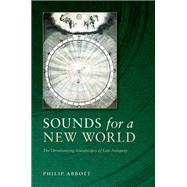
- ISBN: 9780197810736 | 019781073X
- Cover: Hardcover
- Copyright: 1/30/2026
In the Greco-Roman world, gods were known to tame soundscapes, or acoustic landscapes. Zeus, Apollo, Orpheus, and other Classical deities demonstrated their power by bringing order to chaotic sound worlds, replacing cacophony with harmony. In late antiquity, Christians took up this archetype and applied it to Jesus. For many early Christians, the advent of Christ resembled the modern phenomenon of a musical key change, but on a grand scale: Jesus initiated a recalibration of the cosmic soundscape, ushering in a new world. However, according to many Christians in late antiquity, this universal key change was not yet complete. Late ancient Christians believed that they could participate in the ongoing sonic work of Christ by Christianizing the acoustic landscapes of the world.
In Sounds for a New World, Philip Abbott explores how late ancient Christians envisioned themselves as participants in the worldwide retuning effort, harmonizing the Classical world to the new Christian reality. Rejecting the sounds of traditional Greco-Roman and Persian cultures, Christians advocated a variety of sonic practices to realize their grand retuning endeavor, including shouting, singing, silent meditation, chanting, and even belching. From the Latin West to the Syriac East, late ancient Christians formed a polyphonous chorus of diverse voices all joining in the great harmonizing work of Jesus as they Christianized the soundscapes of the world.
For years, scholars have noted the monumental changes that took place in early Christianity during the so-called Constantinian Revolution. But Abbott turns our attention to an unexplored aspect of this transitional moment, arguing that it was not simply a political or religious revolution - it was a revolution of the senses. Central to this sensorial transformation was sound. As Christianity gained imperial power in the fourth century, Christians began the process of re-tuning the world for Christ.
In Sounds for a New World, Philip Abbott explores how late ancient Christians envisioned themselves as participants in the worldwide retuning effort, harmonizing the Classical world to the new Christian reality. Rejecting the sounds of traditional Greco-Roman and Persian cultures, Christians advocated a variety of sonic practices to realize their grand retuning endeavor, including shouting, singing, silent meditation, chanting, and even belching. From the Latin West to the Syriac East, late ancient Christians formed a polyphonous chorus of diverse voices all joining in the great harmonizing work of Jesus as they Christianized the soundscapes of the world.
For years, scholars have noted the monumental changes that took place in early Christianity during the so-called Constantinian Revolution. But Abbott turns our attention to an unexplored aspect of this transitional moment, arguing that it was not simply a political or religious revolution - it was a revolution of the senses. Central to this sensorial transformation was sound. As Christianity gained imperial power in the fourth century, Christians began the process of re-tuning the world for Christ.

Please wait while the item is added to your bag...



Review