

Stealing Horses to Great Applause The Origins of the First World War Reconsidered
, by Schroeder, Paul W.; Anderson, Perry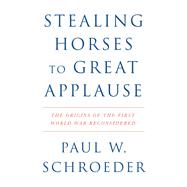
- ISBN: 9781804295793 | 1804295795
- Cover: Hardcover
- Copyright: 2/18/2025
Stand-out theoretical and empirical explanation of the origins of the First World War by one of the great historians of international diplomacy
Stealing Horses to Great Applause presents arguably the finest considerations yet of the origins of the First World War. Breaking with accounts which focus on the actions of a single state or the final countdown to hostilities, Paul W. Schroeder describes the systemic crisis engulfing the Great Powers.
They were more interested in colonial plunder overseas (stealing horses to great applause, in the old Spanish adage) than the traditional statecraft of European peace-making. Preserving the balance of power required preserving all the essential actors in it, including a tottering Austria-Hungary. This the British in particular failed to recognise. The Central Powers may have started the War but that does not mean they in any real sense caused it. In the end Schroeder recalls the verdict of Shakespeare's Romeo and Juliet: All are punished.
Stealing Horses to Great Applause includes appraisals of Niall Ferguson and A. J. P. Taylor, and an extensive unpublished final paper rethinking the First World War as "the last 18th-century war."
With an introduction by Perry Anderson.
Stealing Horses to Great Applause presents arguably the finest considerations yet of the origins of the First World War. Breaking with accounts which focus on the actions of a single state or the final countdown to hostilities, Paul W. Schroeder describes the systemic crisis engulfing the Great Powers.
They were more interested in colonial plunder overseas (stealing horses to great applause, in the old Spanish adage) than the traditional statecraft of European peace-making. Preserving the balance of power required preserving all the essential actors in it, including a tottering Austria-Hungary. This the British in particular failed to recognise. The Central Powers may have started the War but that does not mean they in any real sense caused it. In the end Schroeder recalls the verdict of Shakespeare's Romeo and Juliet: All are punished.
Stealing Horses to Great Applause includes appraisals of Niall Ferguson and A. J. P. Taylor, and an extensive unpublished final paper rethinking the First World War as "the last 18th-century war."
With an introduction by Perry Anderson.

Please wait while the item is added to your bag...



Review