

Storytelling in Motion Cinematic Choreography and the Film Musical
, by Oyallon-Koloski, Jenny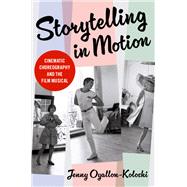
- ISBN: 9780197602669 | 0197602665
- Cover: Hardcover
- Copyright: 5/31/2024
How do filmmakers guide viewer attention through the frame using the movement of bodies on screen? What do they seek to communicate with their cinematic choreography, and how were those choices shaped by the industrial conditions available to them?
Storytelling in motion: Cinematic Choreography and the Film Musical demonstrates how figure movement can serve as a versatile strategy of meaning-making, particularly when filmmakers attend to the relationship between choreographed movement and film style. Using Franco-American film musicals as case studies, this book analyses the narrative and stylistic impact of figure movement in cinema and the subtle power of cinematic choreography, those moments when filmmakers deliberately combine the strengths of film style and organized figure movement to convey narrative meaning through motion. Cinematic choreography emphasizes musical conventions in Singin' in the Rain (Stanley Donen and Gene Kelly, 1952), prejudiced conflict in West Side Story (Jerome Robbins and Robert Wise, 1961), aesthetic play in Les Demoiselles de Rochefort (Jacques Demy, 1967), generic discomfort in Trois places pour le 26 (Jacques Demy, 1988), the politics of illness in Jeanne et le garçon formidable (Olivier Ducastel and Jacques Martineau, 1998), and decision-making in La La Land (Damien Chazelle, 2016).
Integrating vocabularies and analytical systems from Laban/Bartenieff Movement Studies, film studies, and related fields to parse cinematic figure movement on multiple formal levels, this book uses performative research methods from videographic criticism to show the poetic and oblique connections between films through videographic as well as written chapters. Storytelling in Motion centers the crucial material conditions needed to make figure movement a significant component of narrative filmmaking: time, money, rehearsal space, industrial support, and performers and crew with the necessary embodied and institutional knowledge. The films discussed tell a clear story of how cinematic choreography was used by French and American filmmakers to innovate storytelling through figure movement, inspired by their predecessors' aesthetics while working within differing industrial conditions.
Storytelling in motion: Cinematic Choreography and the Film Musical demonstrates how figure movement can serve as a versatile strategy of meaning-making, particularly when filmmakers attend to the relationship between choreographed movement and film style. Using Franco-American film musicals as case studies, this book analyses the narrative and stylistic impact of figure movement in cinema and the subtle power of cinematic choreography, those moments when filmmakers deliberately combine the strengths of film style and organized figure movement to convey narrative meaning through motion. Cinematic choreography emphasizes musical conventions in Singin' in the Rain (Stanley Donen and Gene Kelly, 1952), prejudiced conflict in West Side Story (Jerome Robbins and Robert Wise, 1961), aesthetic play in Les Demoiselles de Rochefort (Jacques Demy, 1967), generic discomfort in Trois places pour le 26 (Jacques Demy, 1988), the politics of illness in Jeanne et le garçon formidable (Olivier Ducastel and Jacques Martineau, 1998), and decision-making in La La Land (Damien Chazelle, 2016).
Integrating vocabularies and analytical systems from Laban/Bartenieff Movement Studies, film studies, and related fields to parse cinematic figure movement on multiple formal levels, this book uses performative research methods from videographic criticism to show the poetic and oblique connections between films through videographic as well as written chapters. Storytelling in Motion centers the crucial material conditions needed to make figure movement a significant component of narrative filmmaking: time, money, rehearsal space, industrial support, and performers and crew with the necessary embodied and institutional knowledge. The films discussed tell a clear story of how cinematic choreography was used by French and American filmmakers to innovate storytelling through figure movement, inspired by their predecessors' aesthetics while working within differing industrial conditions.

Please wait while the item is added to your bag...


