

Strange Future
, by Song, Min Hyoung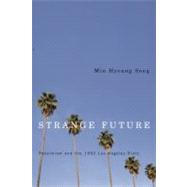
- ISBN: 9780822335924 | 0822335921
- Cover: Paperback
- Copyright: 11/30/2005
Sometime near the start of the 1990s, the future became a place of national decline. The United States had entered a period of great anxiety fuelled by the shrinking of the white middle class, the increasingly visible misery of poor urban blacks, and the mass immigration of nonwhites. Perhaps more than any other event marking the passage through these dark years, the 1992 Los Angeles riots have sparked imaginative and critical works reacting to this profound pessimism. Focusing on a wide range of these creative works, Min Hyoung Song shows how the L. A. riots have become a cultural-literary event-an important reference and resource for imagining the social problems plaguing the United States and its possible futures. Song considers works that address the riots and often the traumatic place of the Korean American community within them: the independent documentary Sa-I-Gu (Korean for April 29, the date the riots began), Chang-rae Lee's novel Native Speaker, the commercial film Strange Days, and the experimental drama of Anna Deavere Smith, among many others. He describes how cultural producers have used the riots to examine the narrative of national decline, manipulating language and visual elements, borrowing and refashioning familiar tropes, and perhaps most significantly, repeatedly turning to metaphors of bodily suffering to convey a sense of an unravelling social fabric. Song argues that these aesthetic experiments offer ways of revisiting the traumas of the past in order to imagine more survivable futures. Min Hyoung Song is Associate Professor of English at Boston College. He is a co-editor of Asian American Studies: A Reader.

Please wait while the item is added to your bag...



Review