

Transparency and Reflection A Study of Self-Knowledge and the Nature of Mind
, by Boyle, Matthew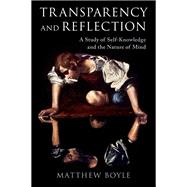
- ISBN: 9780199926299 | 0199926298
- Cover: Hardcover
- Copyright: 2/23/2024
The topic of self-knowledge has been central to philosophy since antiquity--but if self-knowledge deserves to be not just a goal that each of us should privately pursue, but a topic that philosophers should investigate in general terms, on what basis does it claim our attention? Much contemporary work in philosophy and cognitive science treats human cognition and perception as processes of representation manipulation, unaffected by our capacity for self-awareness. In Transparency and Reflection Matthew Boyle challenges this paradigm by urging a reconsideration of the classical idea that the capacity for reflective self-knowledge is an essential feature of human mindedness.
Boyle argues that our ability for reflective self-knowledge is a byproduct of the "first person perspective" on our own lives that all human beings possess, as rational animals, and he seeks to defend this perspective against influential forms of skepticism about its soundness. Once we appreciate the connection between having a first person perspective on our own minds and having the capacity for self-knowledge, Boyle suggests, we can see a link between debates about how we know our own minds and the dark but intriguing idea that Jean-Paul Sartre expressed in his remark that, for a human being, "to exist is always to assume its being" in a way that implies "an understanding of human reality by itself."
Boyle argues that our ability for reflective self-knowledge is a byproduct of the "first person perspective" on our own lives that all human beings possess, as rational animals, and he seeks to defend this perspective against influential forms of skepticism about its soundness. Once we appreciate the connection between having a first person perspective on our own minds and having the capacity for self-knowledge, Boyle suggests, we can see a link between debates about how we know our own minds and the dark but intriguing idea that Jean-Paul Sartre expressed in his remark that, for a human being, "to exist is always to assume its being" in a way that implies "an understanding of human reality by itself."

Please wait while the item is added to your bag...



Review