

The Value of Money
, by Patnaik, Prabhat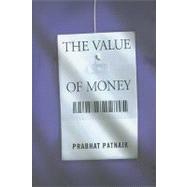
- ISBN: 9780231146760 | 0231146760
- Cover: Hardcover
- Copyright: 3/1/2009
Why is money more valuable than the paper on which it is printed?Monetarists link the value of money to its supply and demand, believing the latterdepends on the total value of the commodities it circulates. According to PrabhatPatnaik, this logic is flawed. In his view, in any nonbarter economy, the value weassign to money is determined independently of its supply anddemand.Through an original and provocative critique ofmonetarism, Patnaik advances a revolutionary understanding of macroeconomics thathighlights the "propertyist" position of Karl Marx and John Maynard Keynes. Unlikethe usual division between "classical" economists (e.g., David Ricardo and Marx) andthe "marginalists" (e.g., Carl Menger, William Stanley Jevons, and Léon Walras),Patnaik places "monetarists," including Ricardo, on one side, while groupingpropertyist writers like Marx, Keynes, and Rosa Luxemburg on the other. This secondgroup subscribes to the idea that the value of money is given from outside the realmof supply and demand, therefore making money a form in which wealth is held. Thefact that money is held as wealth in turn gives rise to the possibility ofdeficiency of aggregate demand under capitalism.It is noaccident that this possibility was highlighted by Marx and Keynes while goinglargely unrecognized by Ricardo and contemporary monetarists. At the same time,Patnaik points to a weakness in the Marx-Keynes tradition& -namely, itslack of any satisfactory explanation of why the value of money, determined fromoutside the realm of supply and demand, remains relatively stable over longstretches of time. The answer to this question lies in the fact that capitalism isnot a self-contained system but is born from a precapitalist setting with which itinteracts and where it creates massive labor reserves that, in turn, impartstability to the value of money. Patnaik's theory of money, then, is also a theoryof imperialism, and he concludes with a discussion of the contemporary internationalmonetary system, which he terms the "oil-dollar" standard.

Please wait while the item is added to your bag...



Review