

Ways of World Knowing Local Knowledge, Coastal Communities, and Equitable Ocean Governance
, by Massimi, Michela; Brown, Abbe E.L.; Jaspars, Marcel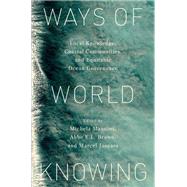
- ISBN: 9780197815335 | 0197815332
- Cover: Hardcover
- Copyright: 3/10/2026
After decades of long and thorny negotiations at the United Nations, the High Seas Treaty was finalised in 2023, to protect marine biodiversity in areas beyond national jurisdiction. This treaty is just one of many instruments that have been introduced as part of global policy efforts to protect oceans amid a climate crisis that is having devastating effects on marine life. Despite the prevalence of ocean knowledge in coastal communities around the world, local ways of knowing have often been marginalised in scientific narratives and legal provisions.
Ways of World Knowing brings together philosophers of science, marine scientists, and lawyers to discuss the role and importance of local coastal community knowledge in order to better represent their voices in ocean governance. By analysing the epistemic value of varieties of local knowledges, this volume invites us to overcome the dichotomy often found in legal documents between marine scientific research and local knowledge. Here, the contributors use the term 'local knowledge' (rather than 'traditional knowledge') deliberately to refer to varieties of ways of knowing more broadly understood—spanning coastal communities from Scotland to Canada, from Brazil to New Zealand—whose distinctive features include their being non-written, artisanal and experiential in nature, and intergenerationally transmitted. Topics include the knowledge of Brazilian fishing communities and of past Hebridean kelpmakers, the cultural significance of herring spawning for the Squamish Nation in Canada, the Indigenous People's knowledge in Australian legal provisions, and arts-based research and practice in international governance spaces, among others.
By bringing a situated knowledge approach to ongoing, timely, and thorny governance questions about the ocean, this volume is an innovative contribution not just for the 'blue humanities' but for environmental studies at large at the intersection of philosophy of science, marine science, and environmental law.
Ways of World Knowing brings together philosophers of science, marine scientists, and lawyers to discuss the role and importance of local coastal community knowledge in order to better represent their voices in ocean governance. By analysing the epistemic value of varieties of local knowledges, this volume invites us to overcome the dichotomy often found in legal documents between marine scientific research and local knowledge. Here, the contributors use the term 'local knowledge' (rather than 'traditional knowledge') deliberately to refer to varieties of ways of knowing more broadly understood—spanning coastal communities from Scotland to Canada, from Brazil to New Zealand—whose distinctive features include their being non-written, artisanal and experiential in nature, and intergenerationally transmitted. Topics include the knowledge of Brazilian fishing communities and of past Hebridean kelpmakers, the cultural significance of herring spawning for the Squamish Nation in Canada, the Indigenous People's knowledge in Australian legal provisions, and arts-based research and practice in international governance spaces, among others.
By bringing a situated knowledge approach to ongoing, timely, and thorny governance questions about the ocean, this volume is an innovative contribution not just for the 'blue humanities' but for environmental studies at large at the intersection of philosophy of science, marine science, and environmental law.

Please wait while the item is added to your bag...



Review