

We Are All Monsters How Deviant Organisms Came to Define Us
, by Mangham, Andrew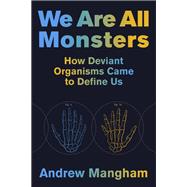
- ISBN: 9780262047524 | 0262047527
- Cover: Hardcover
- Copyright: 2/14/2023
How the monsters of nineteenth-century literature and science came to define us.
“Was I then a monster, a blot upon the earth, from which all men fled and whom all men disowned?” In We Are All Monsters, Andrew Mangham offers a fresh interpretation of this question uttered by Frankenstein’s creature in Mary Shelley’s 1818 novel in an expansive exploration of how nineteenth-century literature and science recast the monster as vital to the workings of nature and key to unlocking the knowledge of all life-forms and processes. Even as gothic literature and freak shows exploited an abiding association between abnormal bodies and horror, amazement, or failure, the development of monsters in the ideas and writings of this period showed the world to be dynamic, varied, plentiful, transformative, and creative.
In works ranging from Comte de Buffon’s interrogations of humanity within natural history to Hugo de Vries’s mutation theory, and from Shelley’s artificial man to fin de siècle notions of body difference, Mangham expertly traces a persistent attempt to understand modern subjectivity through a range of biological and imaginary monsters. In a world that hides monstrosity behind theoretical and cultural representations that reinscribe its otherness, this enlightened book shows how innovative nineteenth-century thinkers dismantled the fictive idea of normality and provided a means of thinking about life in ways that check the reflexive tendency to categorize and divide.
“Was I then a monster, a blot upon the earth, from which all men fled and whom all men disowned?” In We Are All Monsters, Andrew Mangham offers a fresh interpretation of this question uttered by Frankenstein’s creature in Mary Shelley’s 1818 novel in an expansive exploration of how nineteenth-century literature and science recast the monster as vital to the workings of nature and key to unlocking the knowledge of all life-forms and processes. Even as gothic literature and freak shows exploited an abiding association between abnormal bodies and horror, amazement, or failure, the development of monsters in the ideas and writings of this period showed the world to be dynamic, varied, plentiful, transformative, and creative.
In works ranging from Comte de Buffon’s interrogations of humanity within natural history to Hugo de Vries’s mutation theory, and from Shelley’s artificial man to fin de siècle notions of body difference, Mangham expertly traces a persistent attempt to understand modern subjectivity through a range of biological and imaginary monsters. In a world that hides monstrosity behind theoretical and cultural representations that reinscribe its otherness, this enlightened book shows how innovative nineteenth-century thinkers dismantled the fictive idea of normality and provided a means of thinking about life in ways that check the reflexive tendency to categorize and divide.

Please wait while the item is added to your bag...



Review